Explore the range and depth of my role, as I present the variety of responsibilities and initiatives I undertake.

Role Overview
Responsibilities
Designed and delivered user-centred experiences across all areas of our marketing website. Owned the end-to-end design lifecycle across multiple platforms with the aim to drive improved usability, optimise engagement and strengthen KPIs. Impact: 14% increase in purchase intent year-on-year.
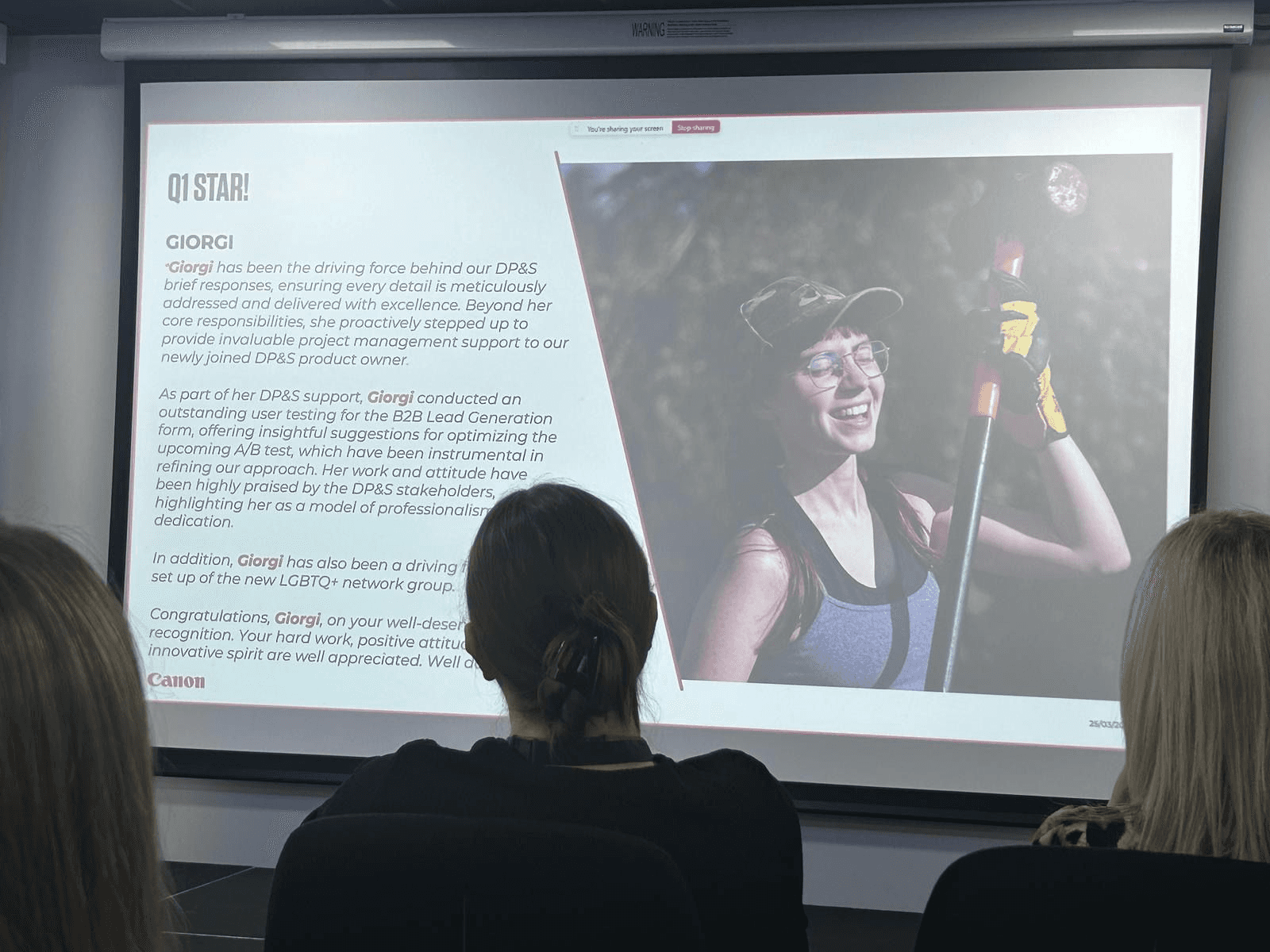
Project Managed during 6 month leave: managed sprint planning, technical brief responses, roadmap planning, stakeholder alignment and handover requirements. As a result, I was recognised twice with Canon's Quarterly Award for exceptional cross-functional leadership and impact.
Tools Used
Figma & Adobe XD for Designing and Prototyping
UserTesting for qualitative research
ContentSquare for live metrics on page engagement
Atlassian for agile work streams
Working with
SEO specialists
Content teams
Publishing teams
Development teams
Product Owners
Recognition & Awards
Team leadership - recognised with Canon Digital's Quarterly Award for exceptional cross-functional leadership and impact for project managing during 6-month leave.
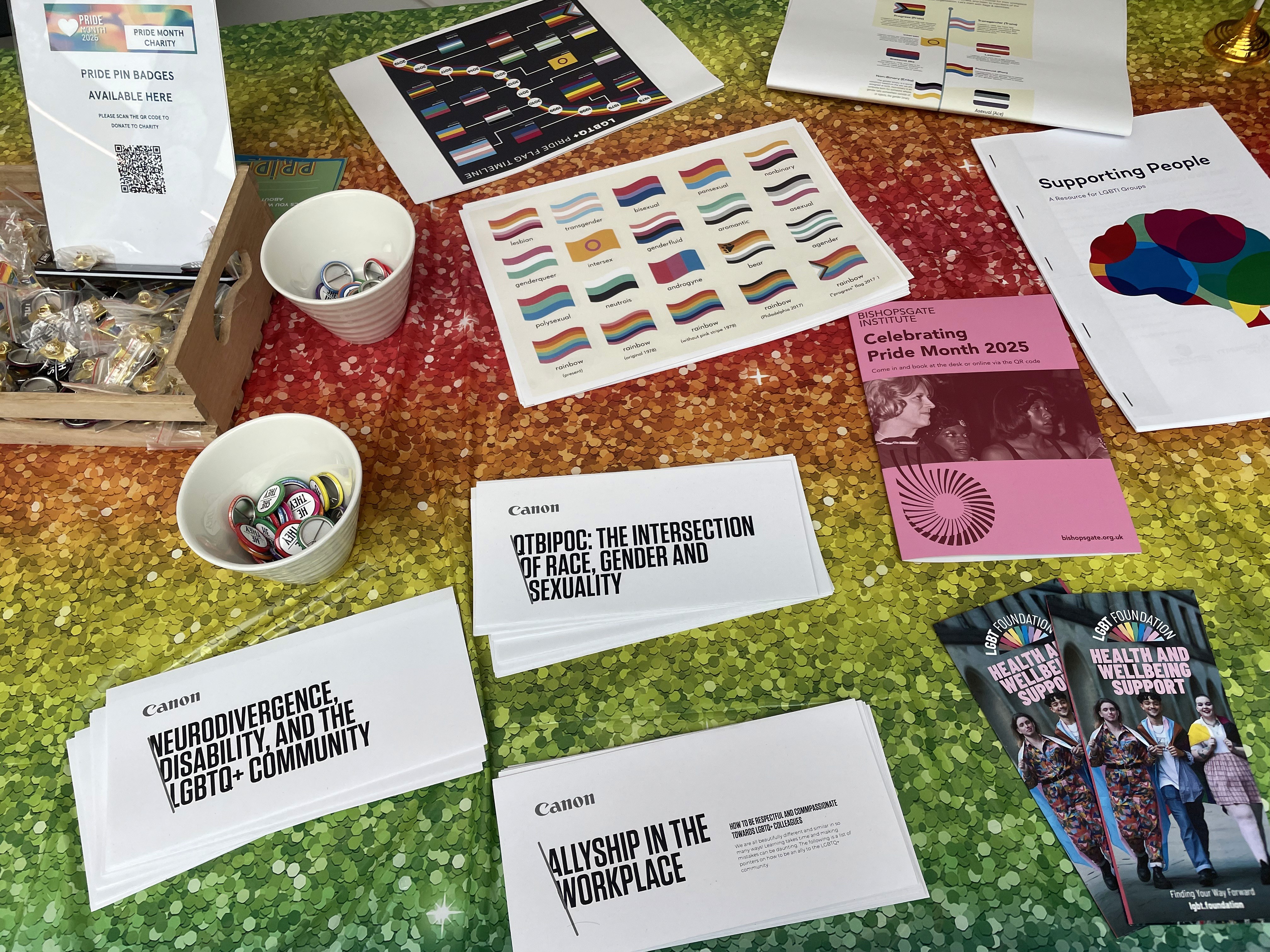
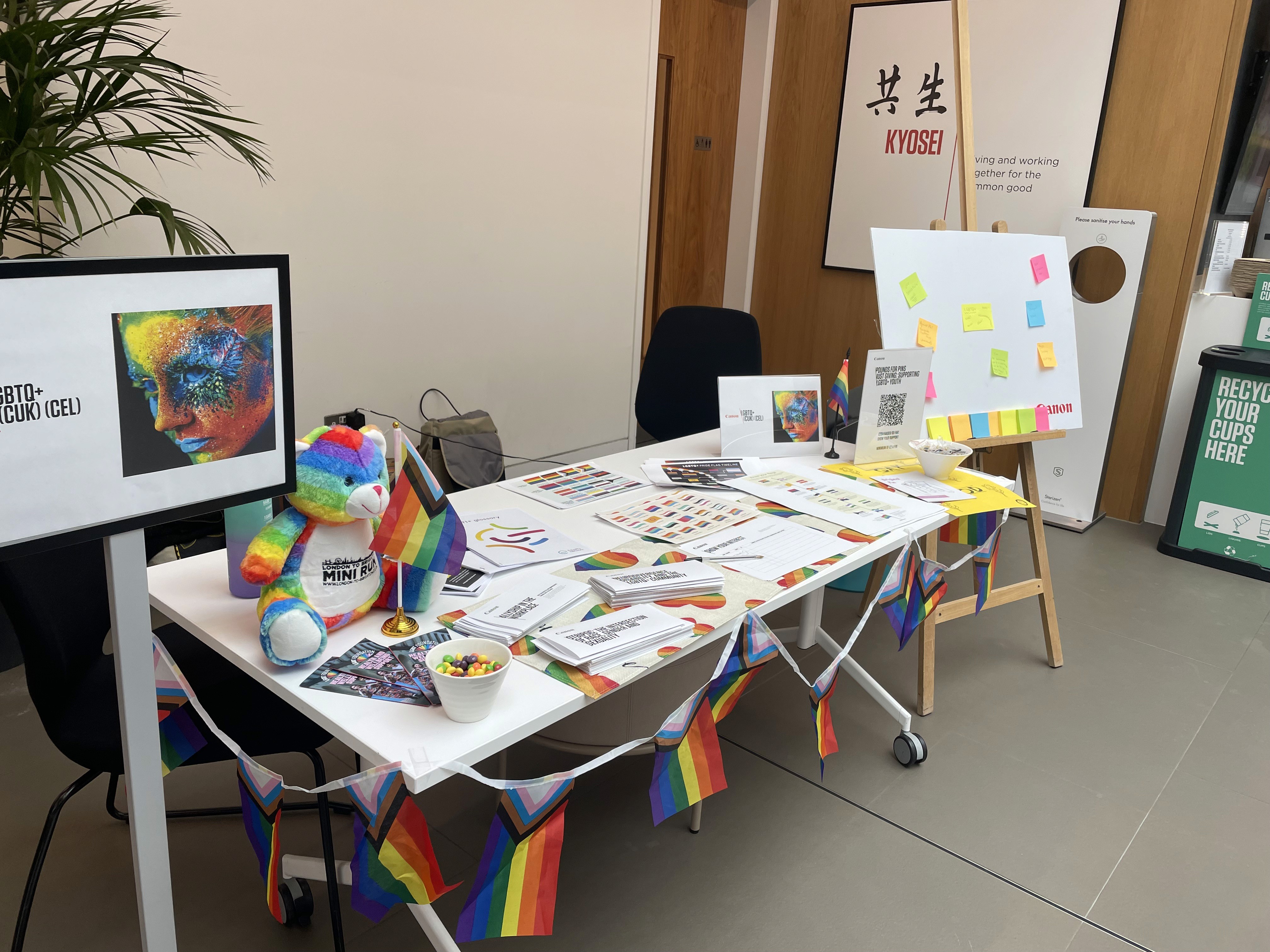
DE&I - Established the Canon EMEA LGBTQ+ Network and ran the largest attended DE&I webinar with Canon photojournalist and ambassador Brent Stirton. Was awarded a Canon EMEA Q3 distinction in 2024 as a result.
Mentoring - Mentoring teenagers from a neighbouring creative academy on all things UX
Business as usual: Products, Services and Campaign Pages
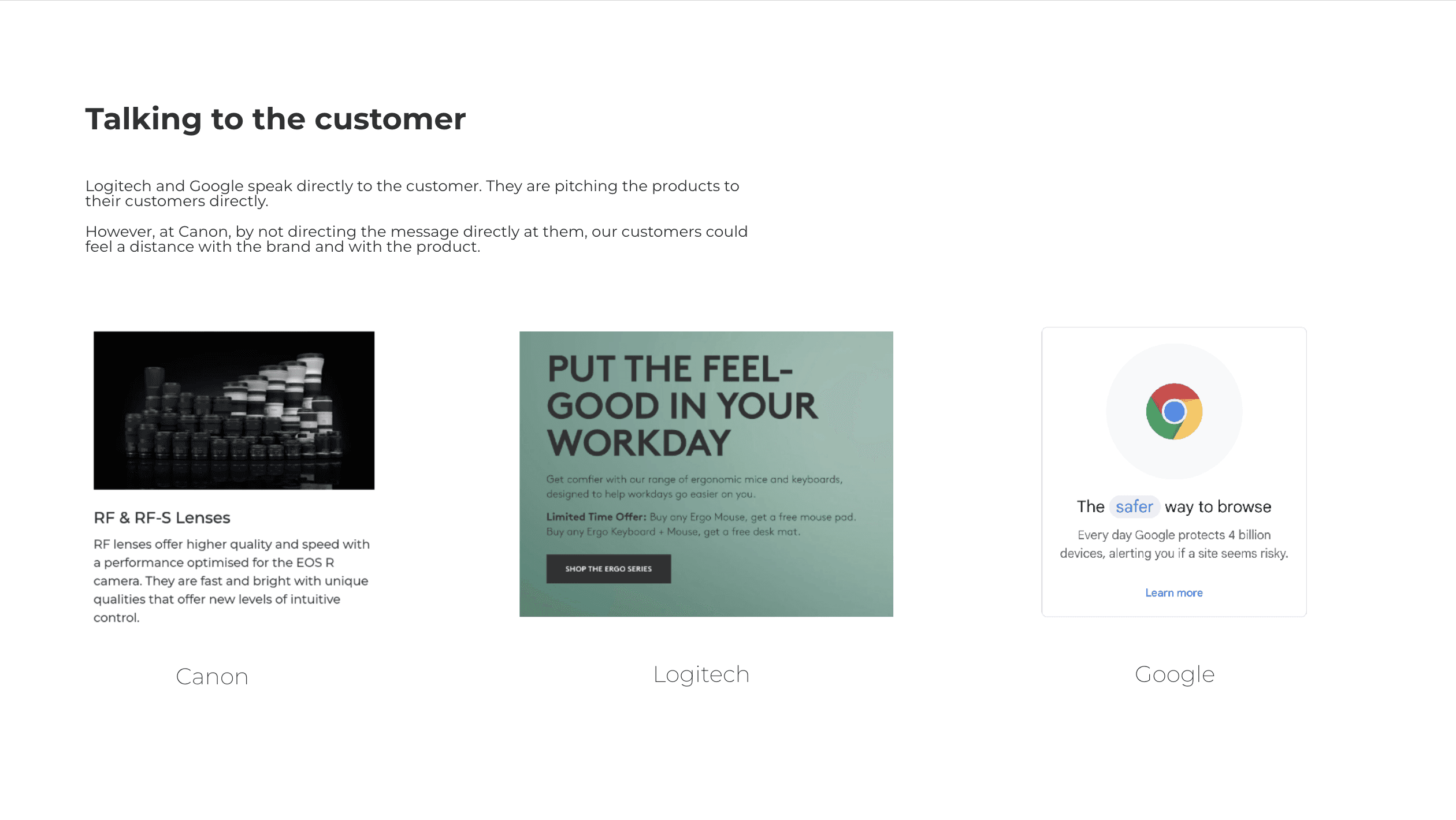
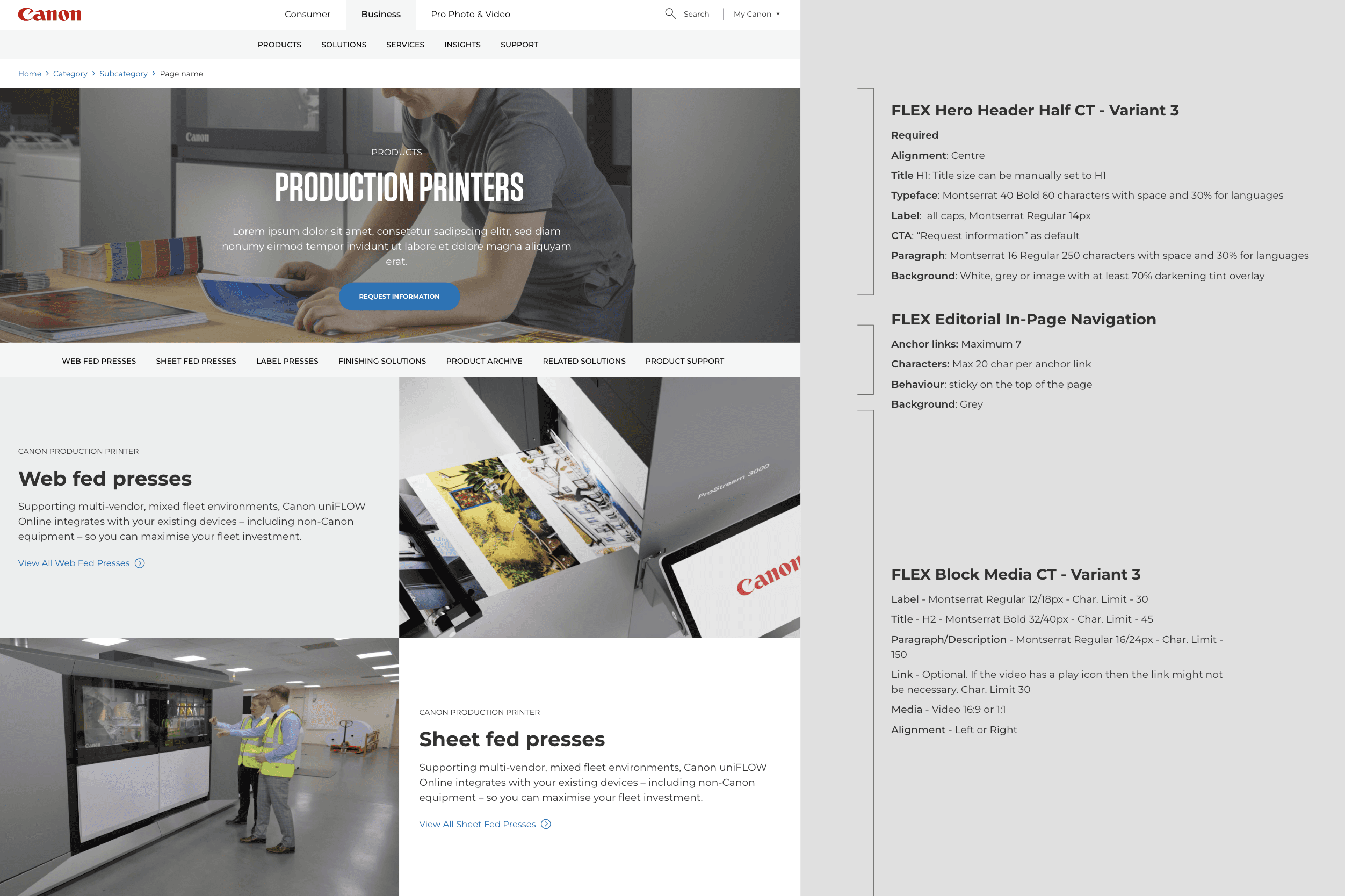
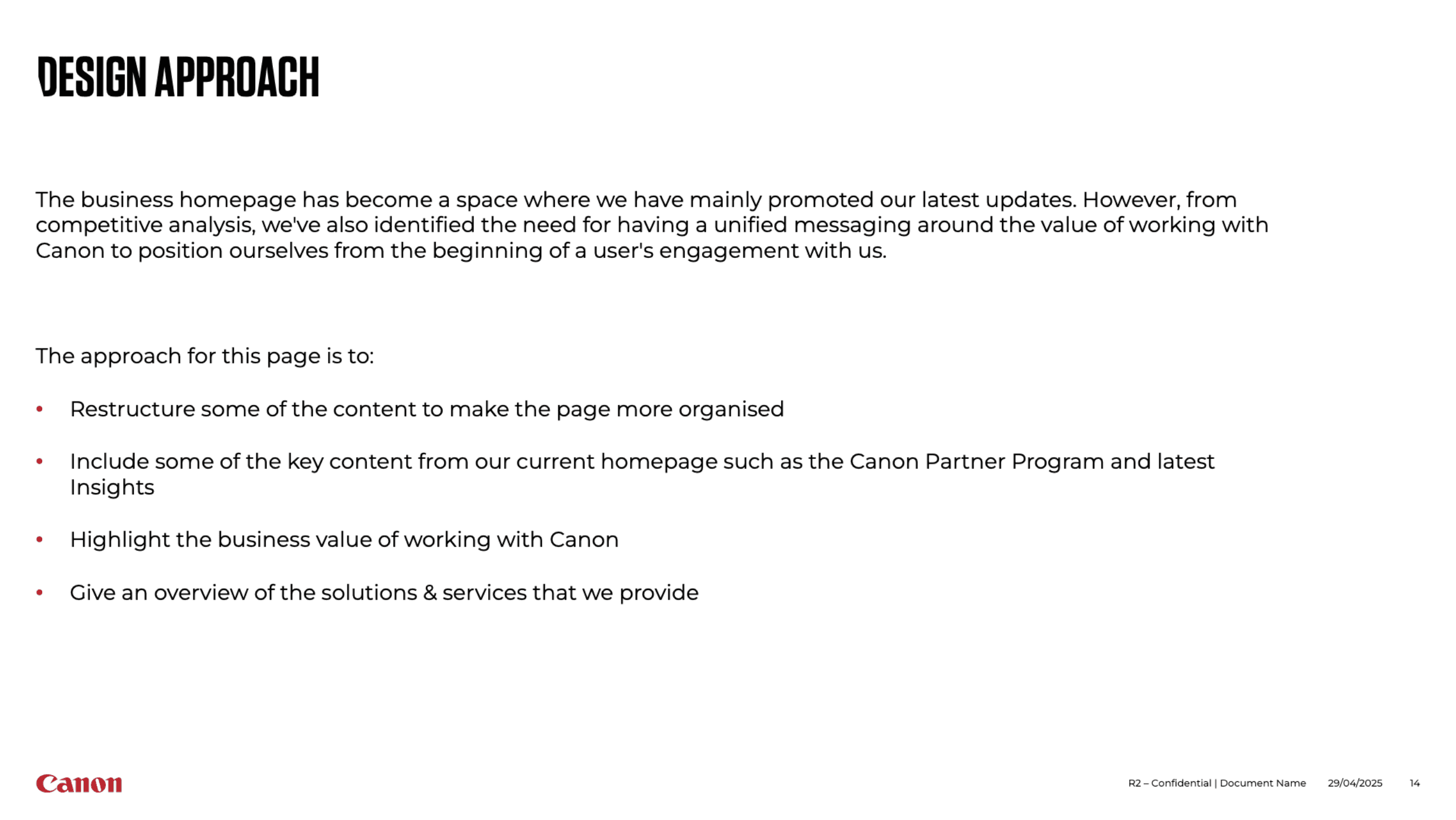
Overview - To refresh or create new pages that position our products to the standard and quality they are built and distinguish them from our competitors. To create intuitive journeys across our site and accommodate to changing user behaviour and business needs.
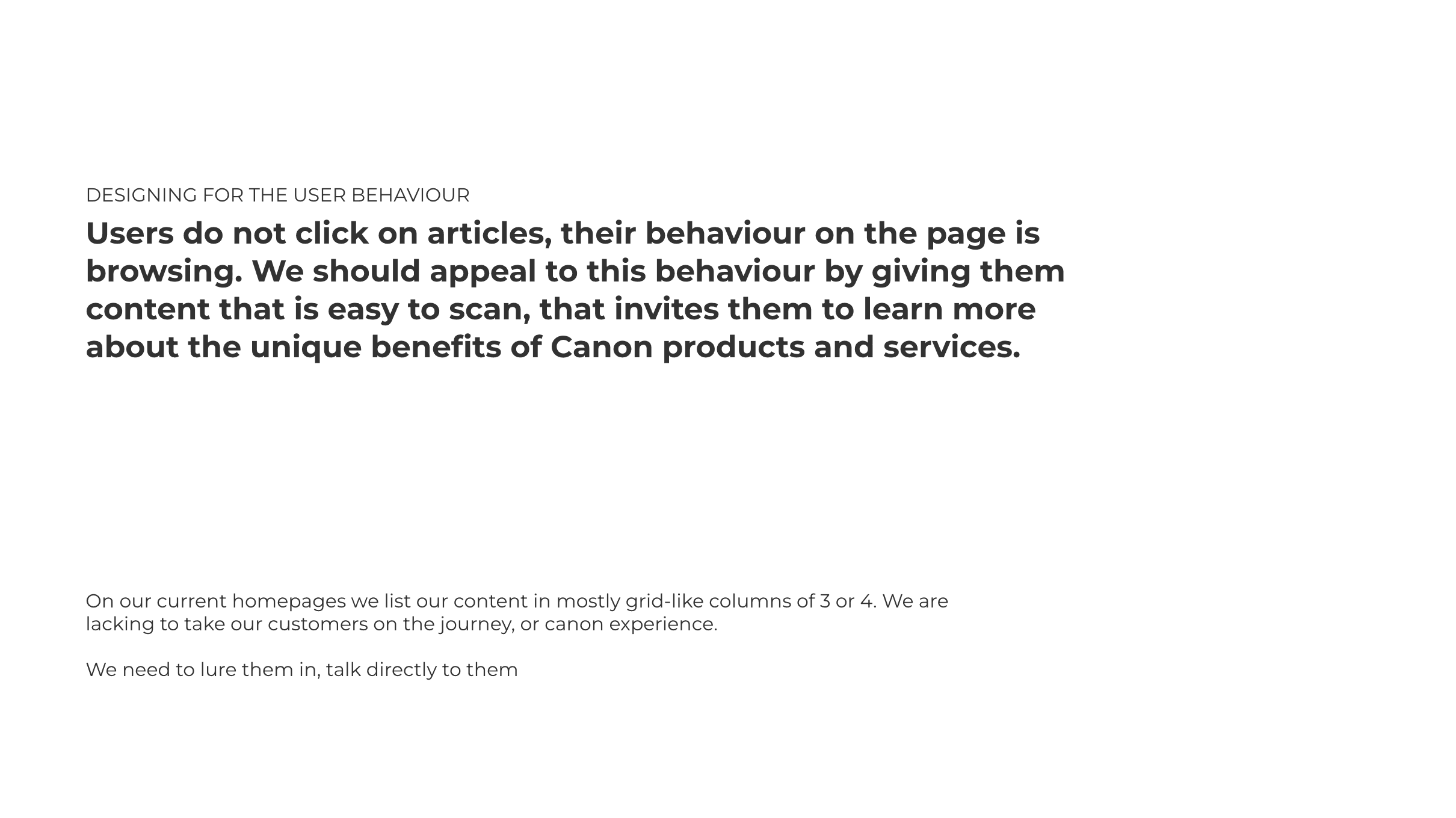
Challenge - To maintain engagement throughout our pages, whilst also appealing to our wide range of users and needs. Developing the appropriate levels of content disclosure strategically at different moments of a user journey.
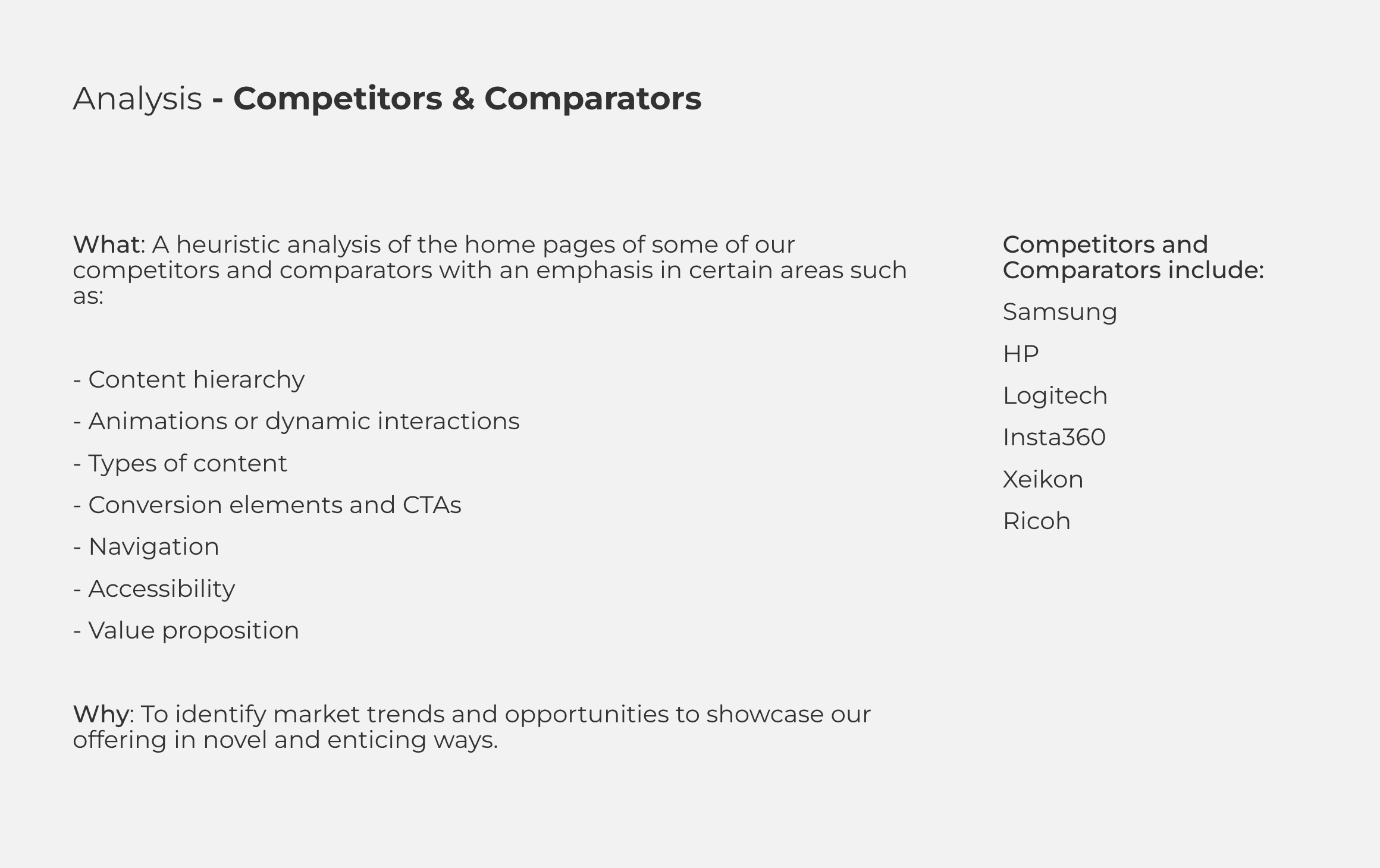
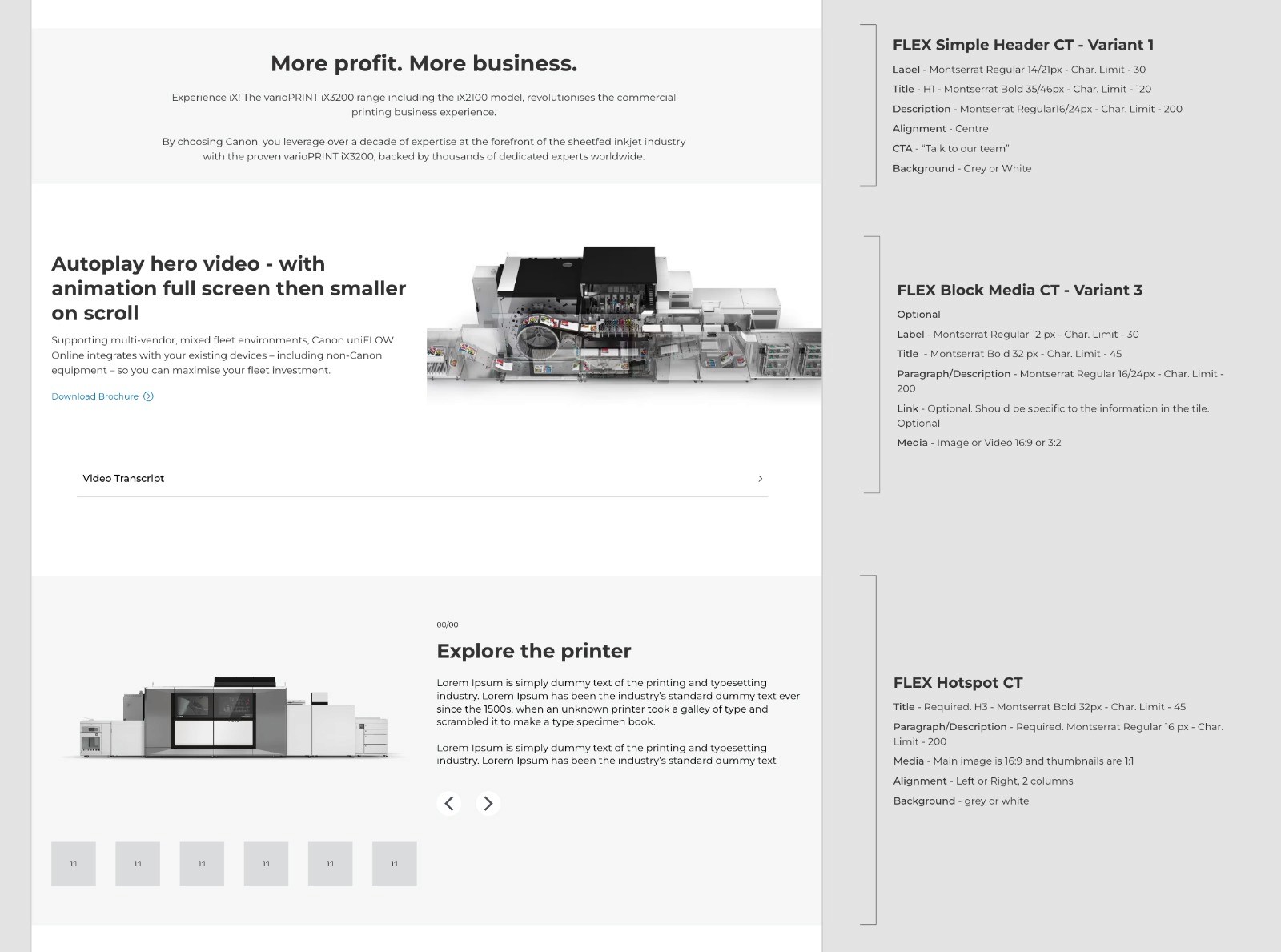
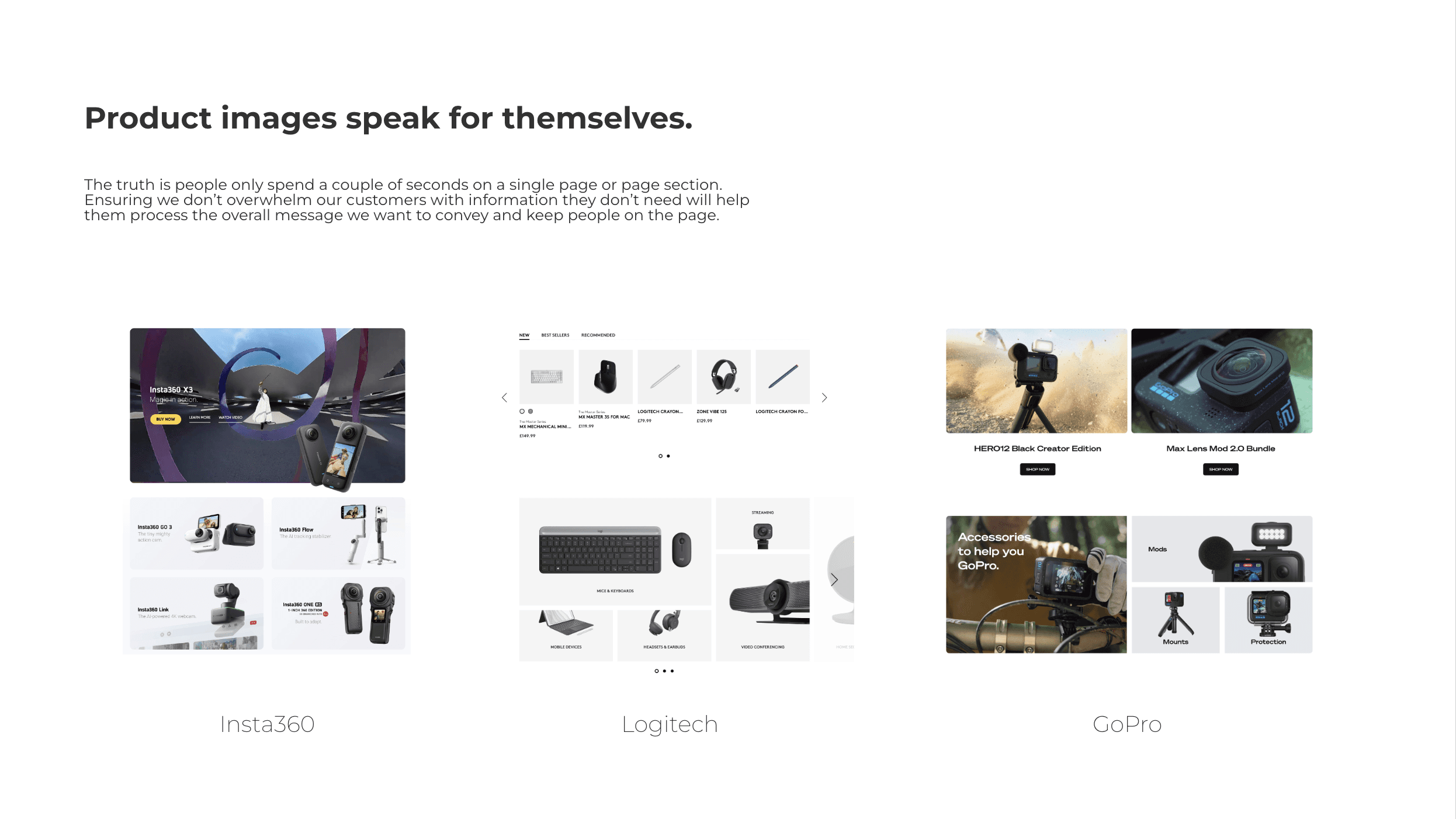
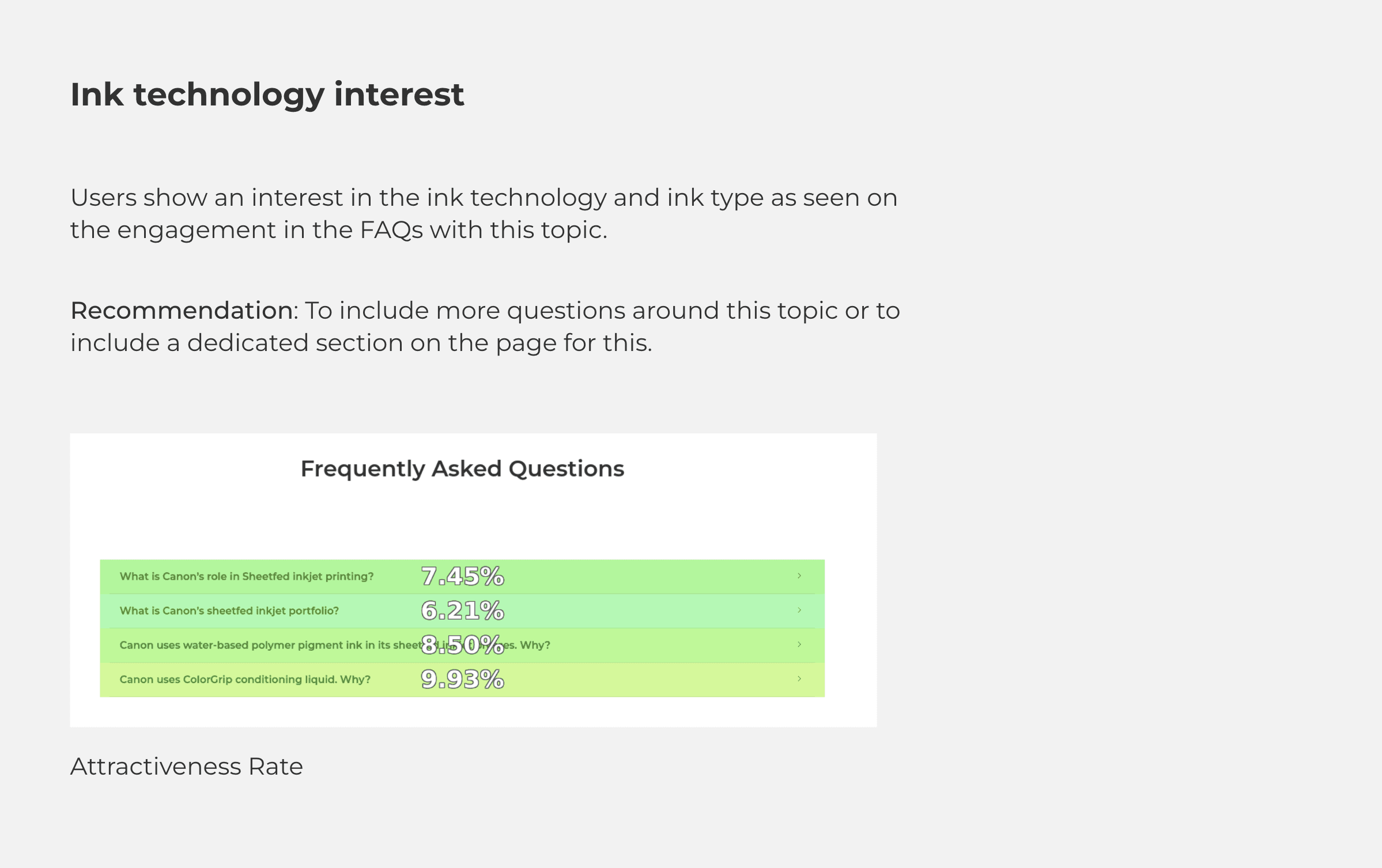
Methodology - Analysed competitor sites and user engagement through ContentSquare to uncover opportunities for improved conversion rates. Optimised user journeys, recommended tailored components based on content needs, and provided clear guidance to content and publishing teams.
Outcomes - Data-driven insights and design recommendations onboarded to stakeholders. Redesigns achieved a 25% increase in page engagement, 13% reduction in bounce rates, 14% increase in purchase intent year-on-year.

Strategic Projects
Canon Homepage

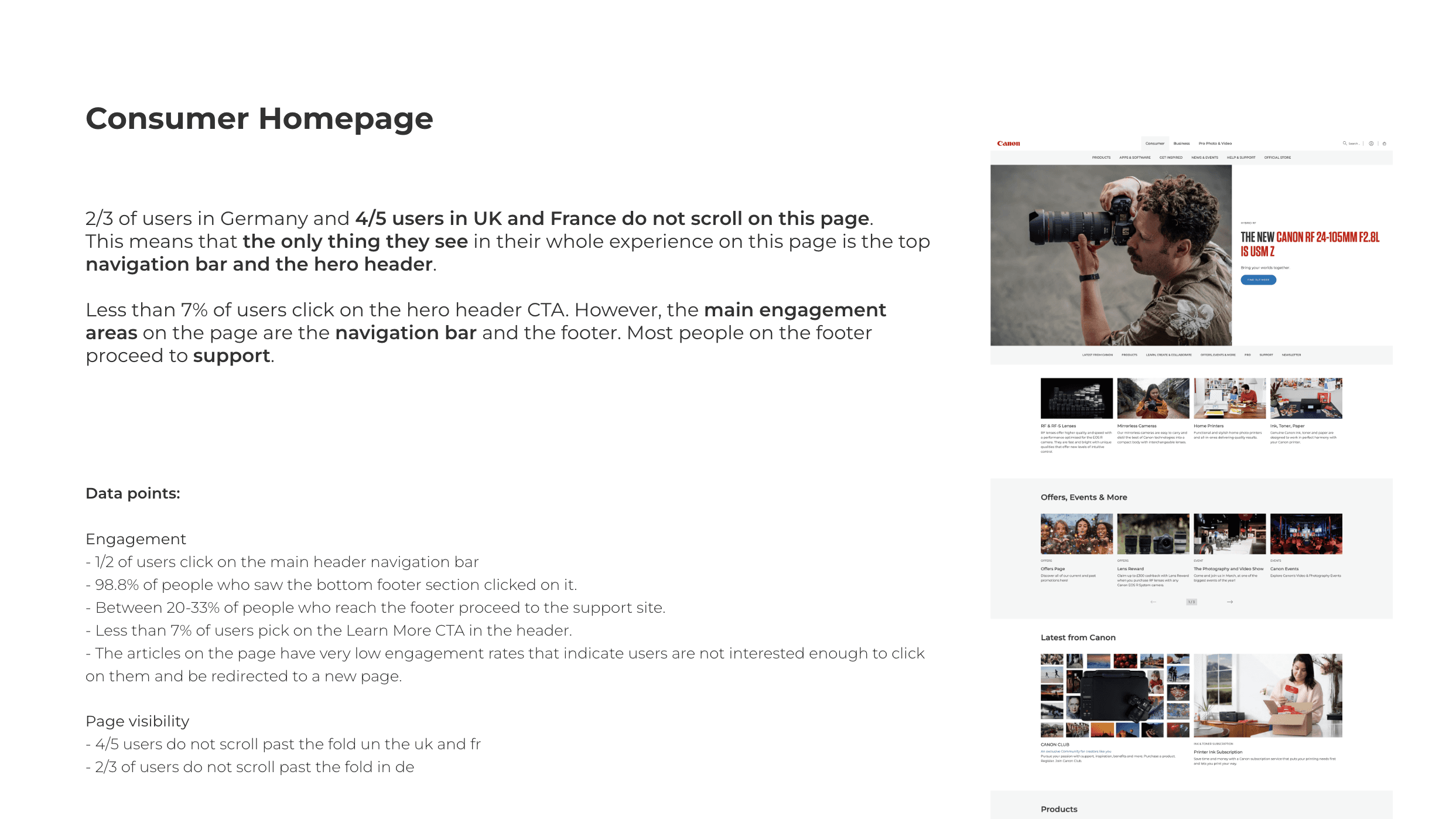
Previously
On hover, the global navigation from the Canon Europe Homepage focused on consumer products, leaving a large range of our best quality equipment behind several clicks.
The homepage also hosted a lot of content without strategic direction, and promoted only a reduced selection of our products and stories.

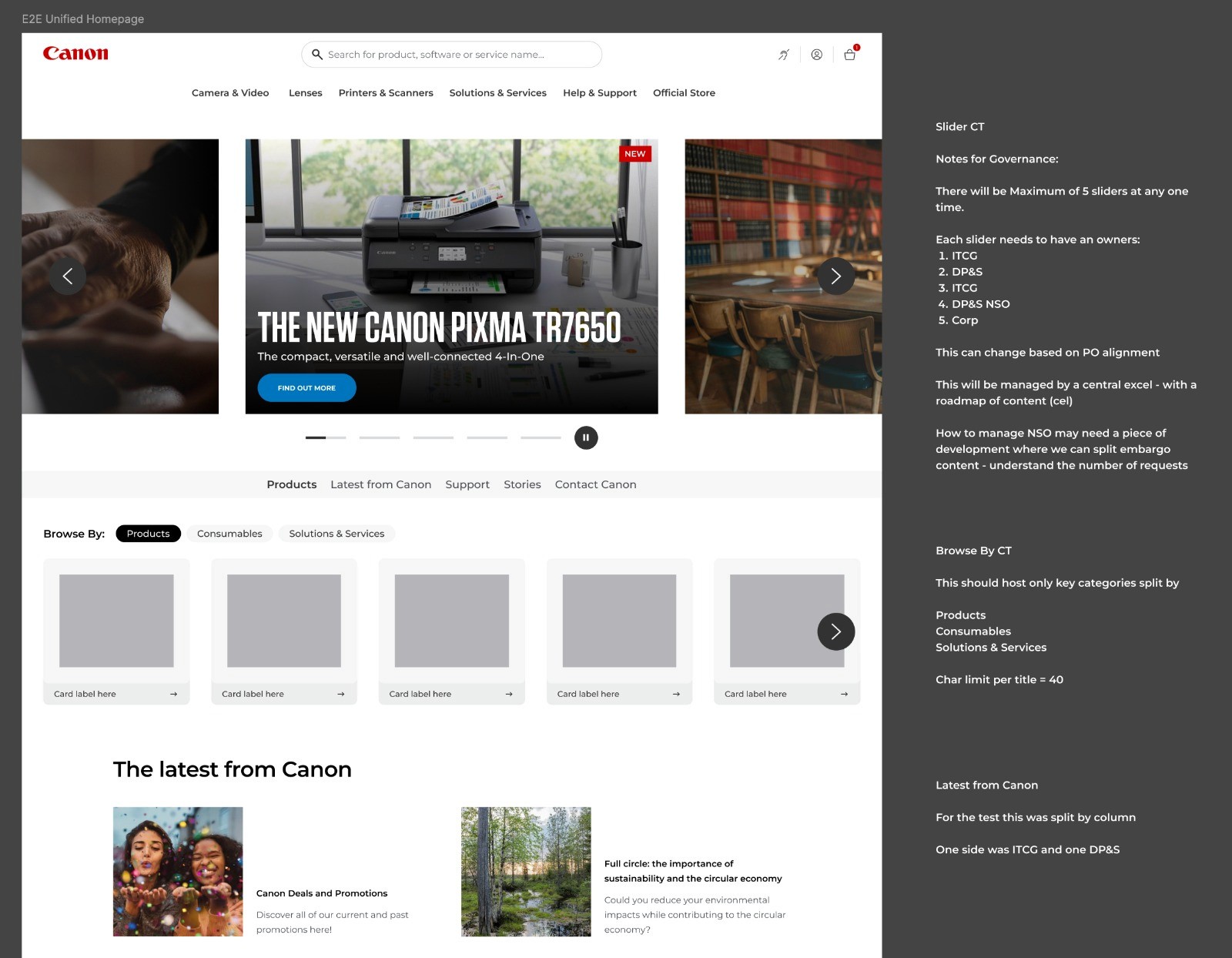
Now
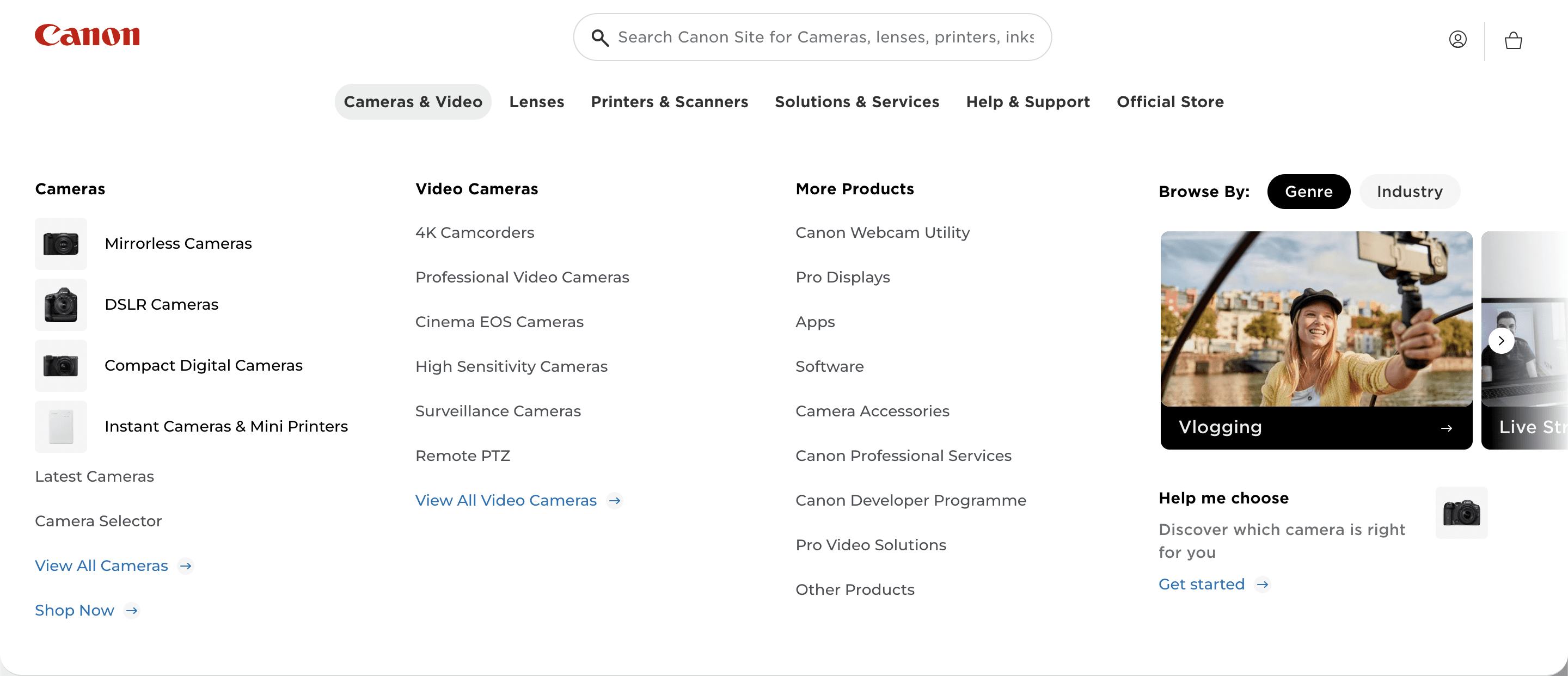
On hover, the global navigation now presents the full range of product and service categories across our site.
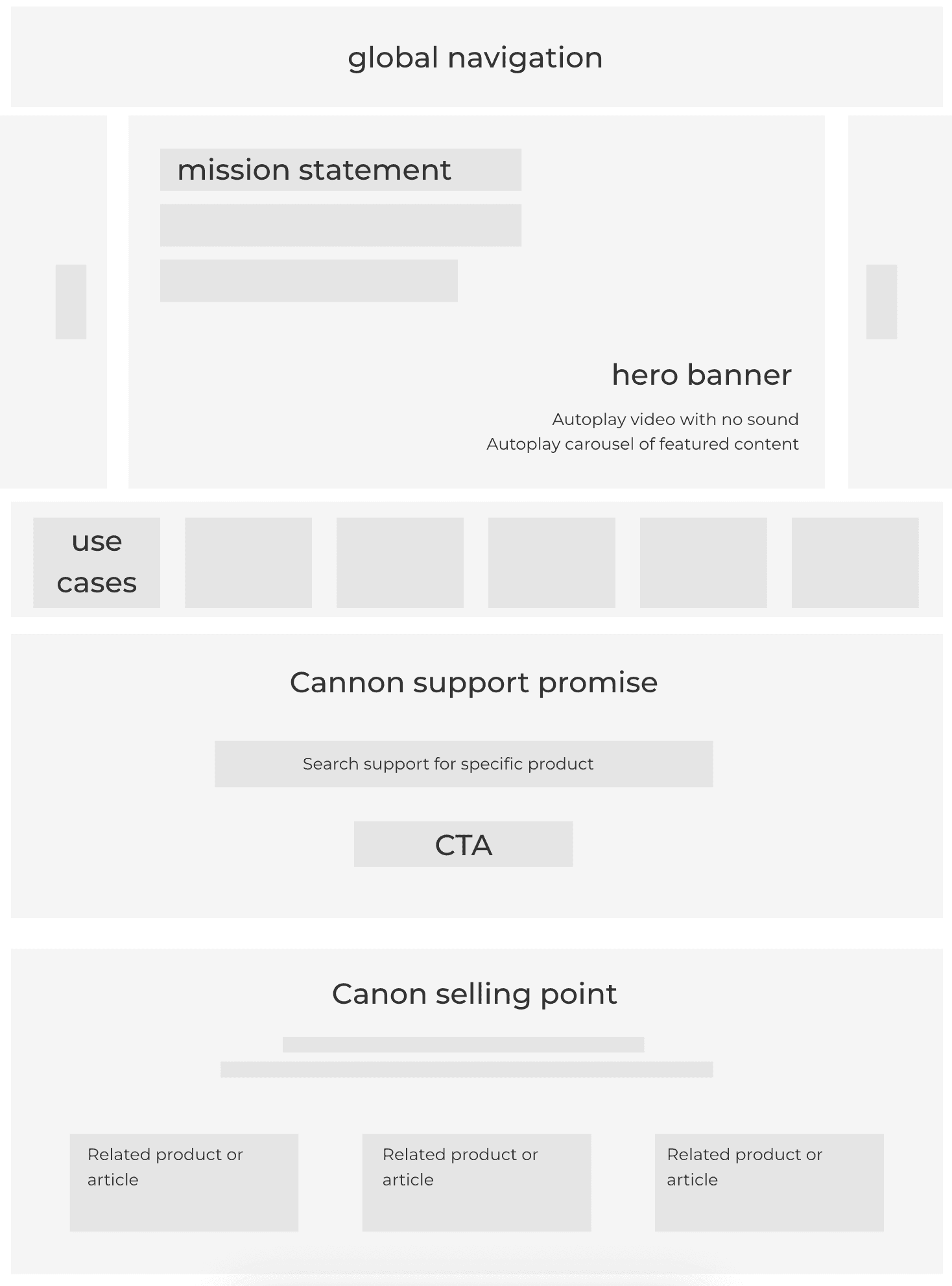
The redesign of the homepage now acts as a hub for the variety of products, activations and brand stories experienced across the business and was designed prioritising user behaviour and needs.
We have built a new interactive slider header highlighting different events, launches, and promotions.
Canon Solutions & Services Landing Page

Previously
With our gradual increase in offerings, our solutions and services hub page became a long, unintuitive and disorganised listing of links - some to hubs listing solutions, and others directly to solutions, many pages being repeated between them and journeys overlapping.
Now - January Launch
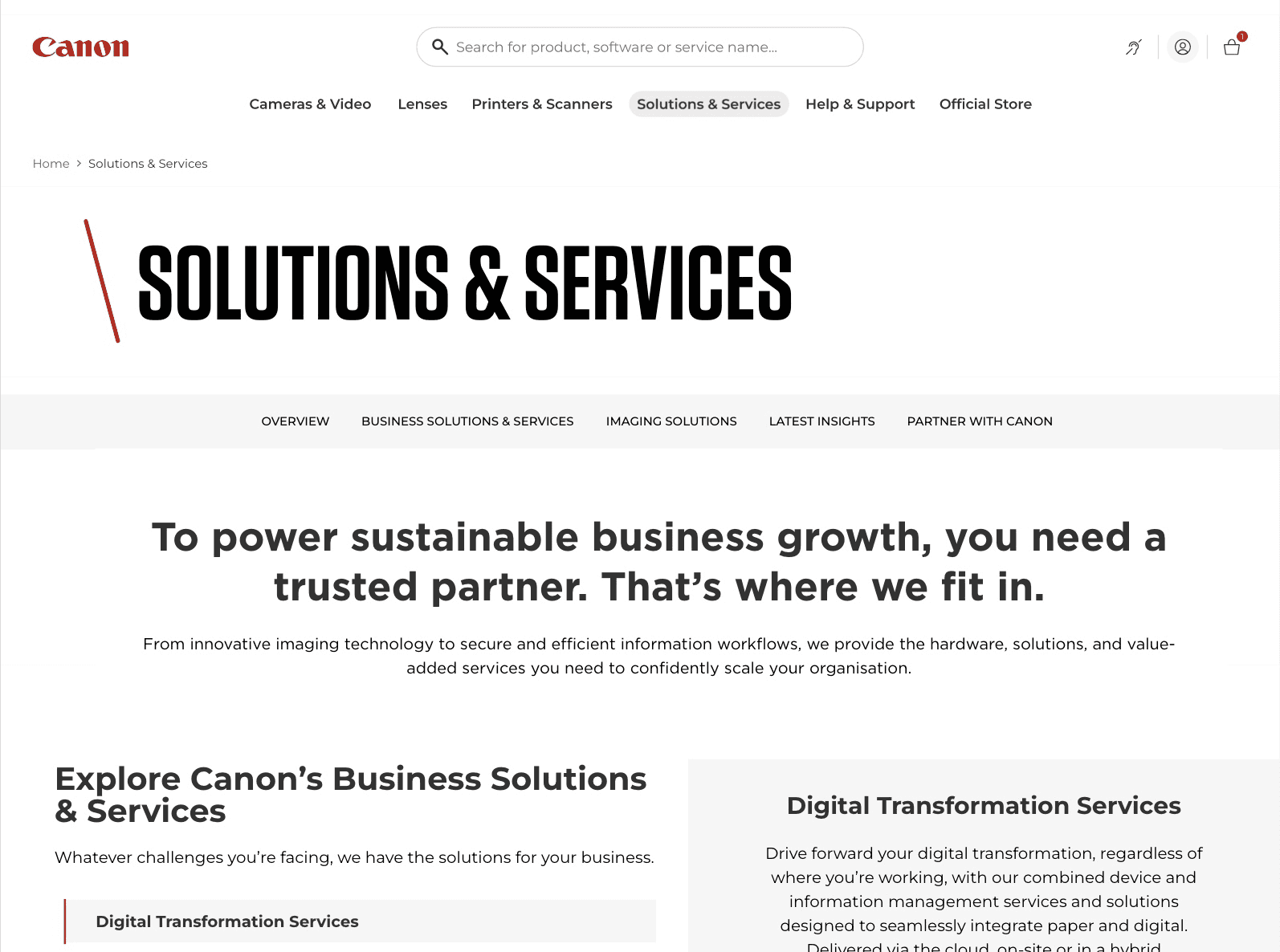
With the strategic unification of our 'Consumer', 'Business' and 'Pro' product groups, we collaborated closely with different product owners across the business to create a valuable hub page that presents our portfolio of offerings and provides efficient journeys to our key solution pages.
Optimising our Lead Generation Form
Overview - I identified an opportunity to optimise our contact form which is the main lead generation on our office, business and production printer pages.
Challenge - Many limitations were presented in this project, mainly technical and budget-related. This meant that that with the product owner and data analyst we had to build a clear roadmap starting with impactful low-development changes that could be implemented early on and ending with a more holistic solution that involves a refined visual finish and a clearer communication and access to the sales team.
Methodology - The first stage was to conduct a usability test to identify at a high level the main usability issues and opportunities to improve the overall UX.
Outcome / Next steps - An first design with thorough handover and interaction specs has been handed-over to the development team for build. We are planning the A/B test to measure the impact on conversion and lead quality.
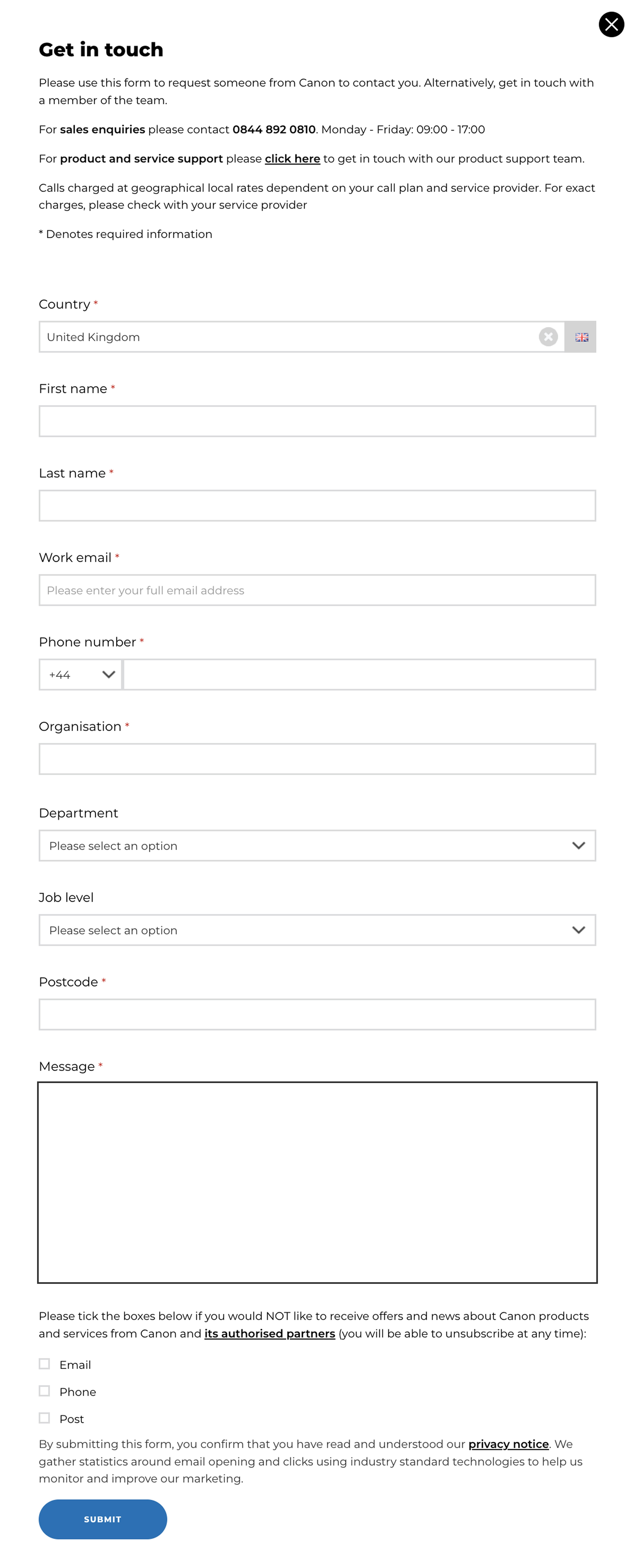
Current form: Key usability issues gathered from the test
The form presented a standard format, lacking customisation or tailoring to the range of user query types or journeys. This makes the form feel out of place in the user's journey.
There was a lack of freedom to chose preferred contact method (form filling, live chat, or immediate contact availability) causing frustration.
Concerns were raised around the relevancy and use of shared, personal details in the form.
Users reacted positively towards the simplicity of the form design.
On form completion, there was a lack of clear and realistic communication of the timeframe the user could expect a response.
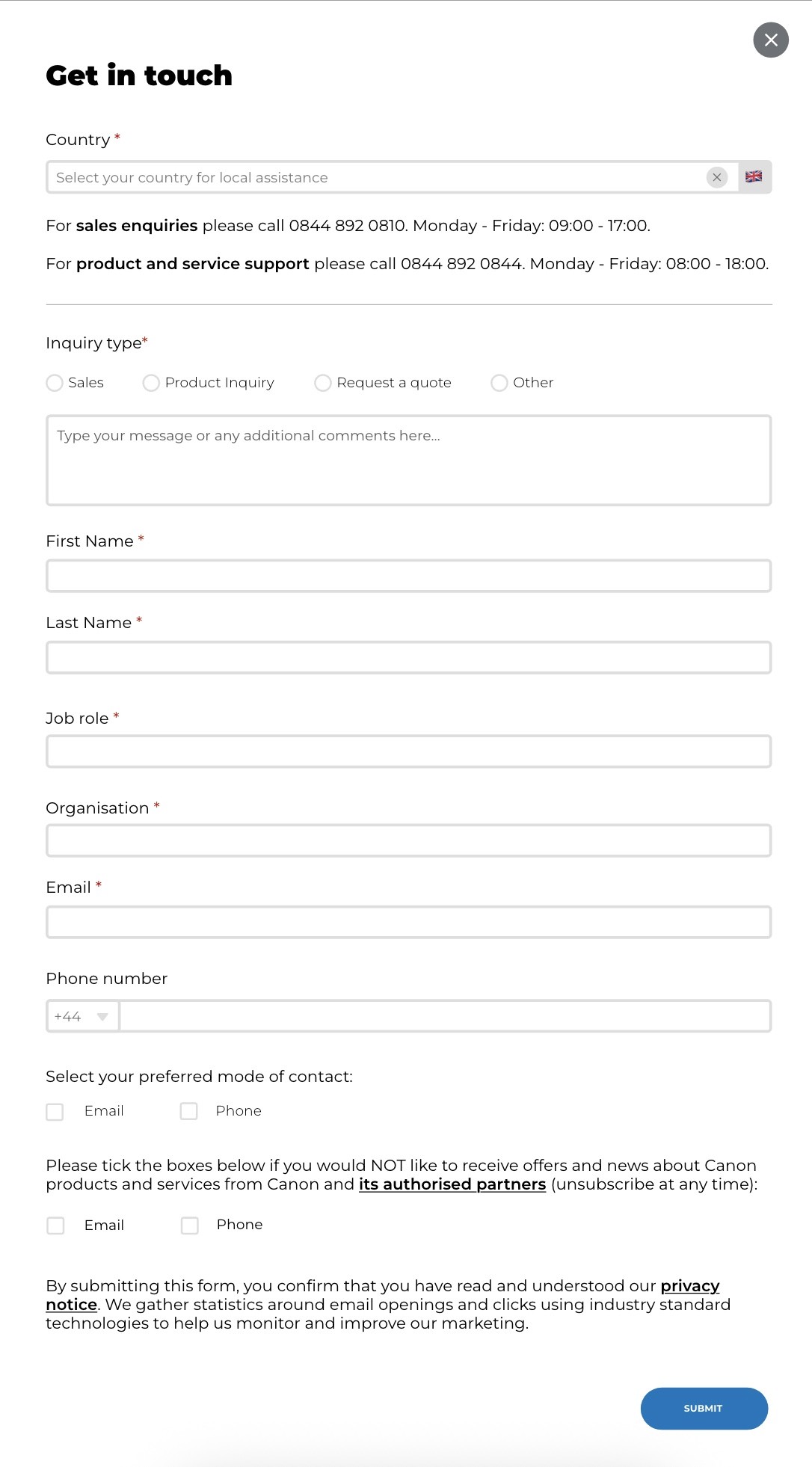
Form proposal for the initial amends
Customisation of the form to the user's locale: This involved moving the country field first and meant that the additional contact information just below was provided accurately early on in the journey.
Contact options visibility: Placing this content at the top makes alternative contact methods immediately visible and relevant to the user's needs. As the project progresses we will ideally include further methods of contact.
Inquiry focused: An option to self define the inquiry type keeps users in a focused mindset and aligns with their intent to reach out about a specific product or service. This also improves lead quality and streamlines internal processes.
Hypothesis on user commitment: By expressing intent upfront, users are more likely to complete the rest of the form's required and generic fields like name, role and email.
Optional phone field logic: If a phone number is entered, a follow-up field appears for users to select their preferred contact method, accommodating our sales team to their preference. If left blank, this section remains hidden.
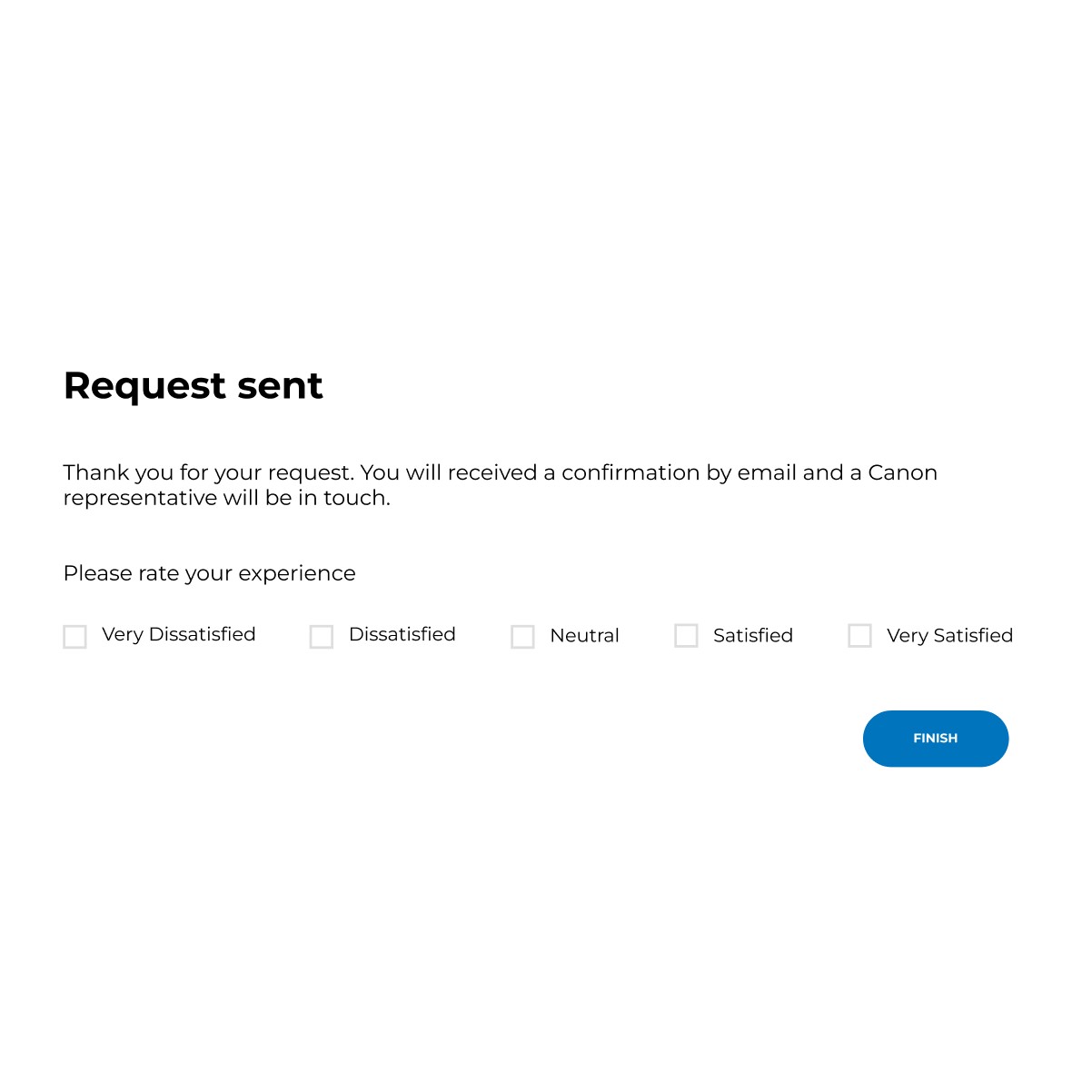
Questionnaire to evaluate perception during A/B test
A rating section was added for feedback and A/B testing. 'Finish' CTA encourage users to submit the rating. Ideally, giving a realistic response time should also be communicated, but this conversation will be had with our different market representatives if the test is successful.
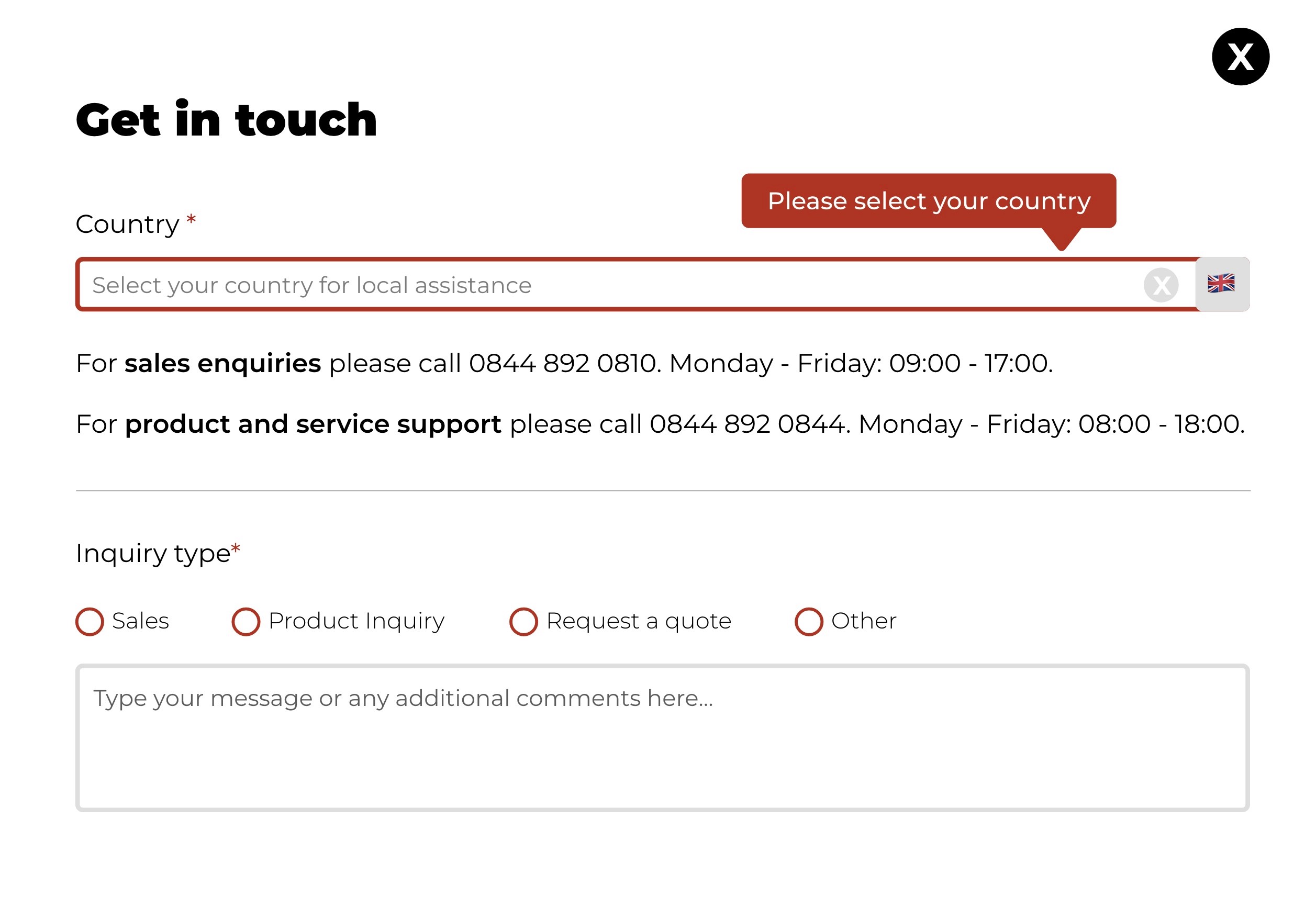
Error States
All error states showed the same 'Required: Please complete this field' message, so I provided messages tailored to each field for better clarity. Phone validation was lacking, so that was also requested to the development team.
AR prototype to view and situate products accurately in a user's environment
I identified the opportunity to build an AR prototype to visualise our products in accurate dimensions within a user’s environment.
I evaluated different applications to create a photogrammetry 3D model myself, but in the end using a digitally prebuilt model resulted more sleek and reactive to environmental lighting.
I also experimented with different platforms such as WebAR and Adobe Aero. The most direct format to create an initial prototype was using a combination of Figma and Google’s <model-viewer>.

AI-integrated UX Design
AI for Design @ Interaction Design Foundation
Completed this course and shared my insights and learnings with the team. Identified opportunities to save approx. 3 hours of research time per UX project through AI-integration.
Hosted and organised a webinar with AI UX expert and lead at EE, Ryan Southall
I reached out to my ex-colleague and amazing strategist, Ryan Southall to run a webinar on how he implemented AI products at EE. Project managers were so impressed by this session that we organised a follow-up a few weeks later to understand all the details of creating a robust product launch strategy.
Sandra Lokas - Team Lead
Sandra Lokas - Team Lead

Screenshot from the webinar!
Design Systems
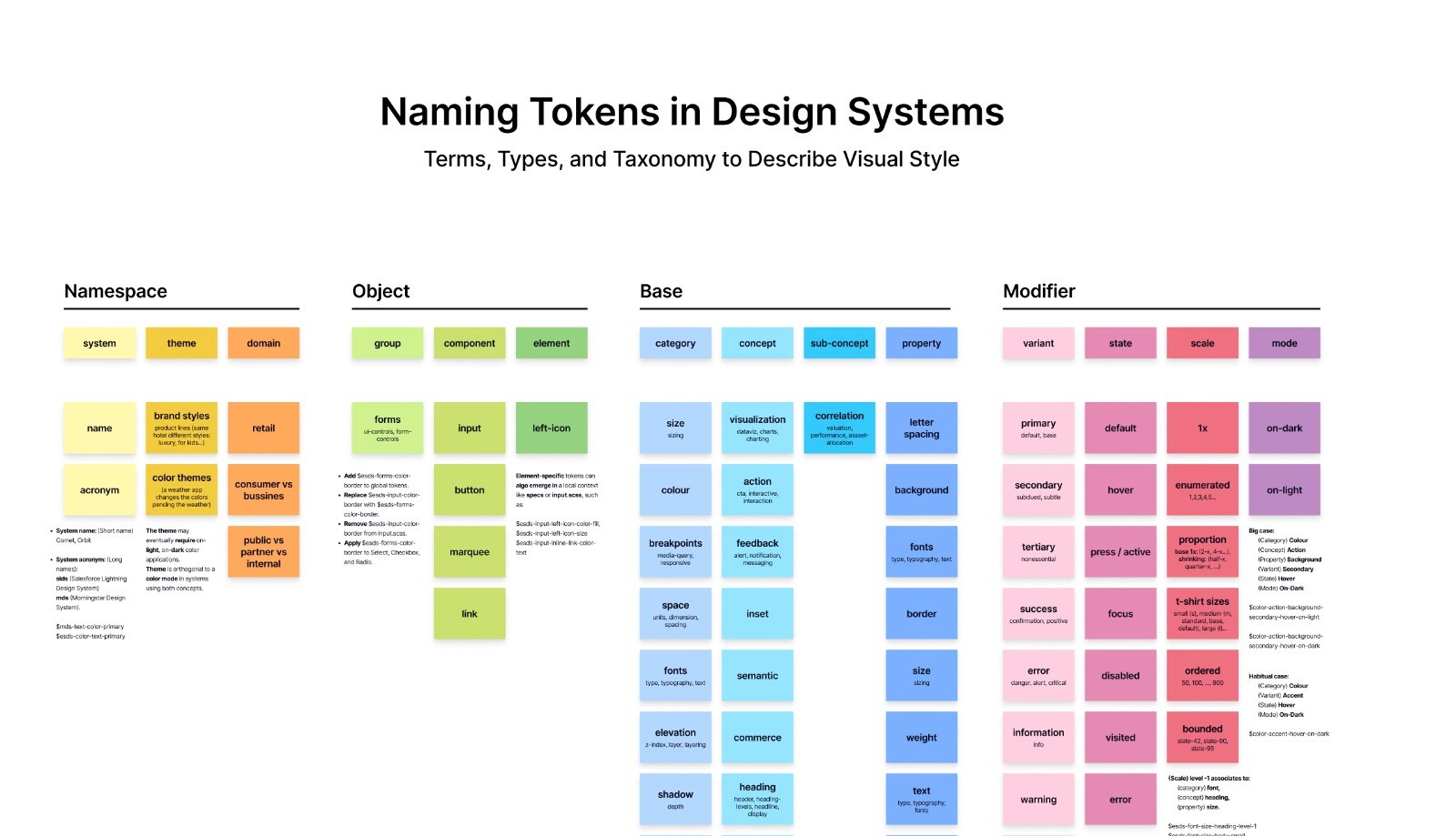
Overview - With the migration of our design processes from Adobe XD to Figma, we migrated and rebuilt our Canon Web Design System from anatomical level to full interactive patterns. This migration came at a time where we were conducting thorough accessibility reviews of our component.
Challenge - The migration posed an inevitable review of our documentation and lent itself to the amendment of several inconsistencies identified. The project was a meticulous and lengthy one, but fruitful in the end.
Methodology - We created a timeline of the milestones to accomplish this large project. Tasks were delegated amongst team members; updates and feedback was provided routinely to maintain project consistency. We audited and cross-platform tested component library against WCAG 2.1 AA. Any changes needed were documented in developer handovers
Outcome - A thorough, accessibility compliant Design System reducing our overall web accessibility risk by 41%.
UX Web Guidelines
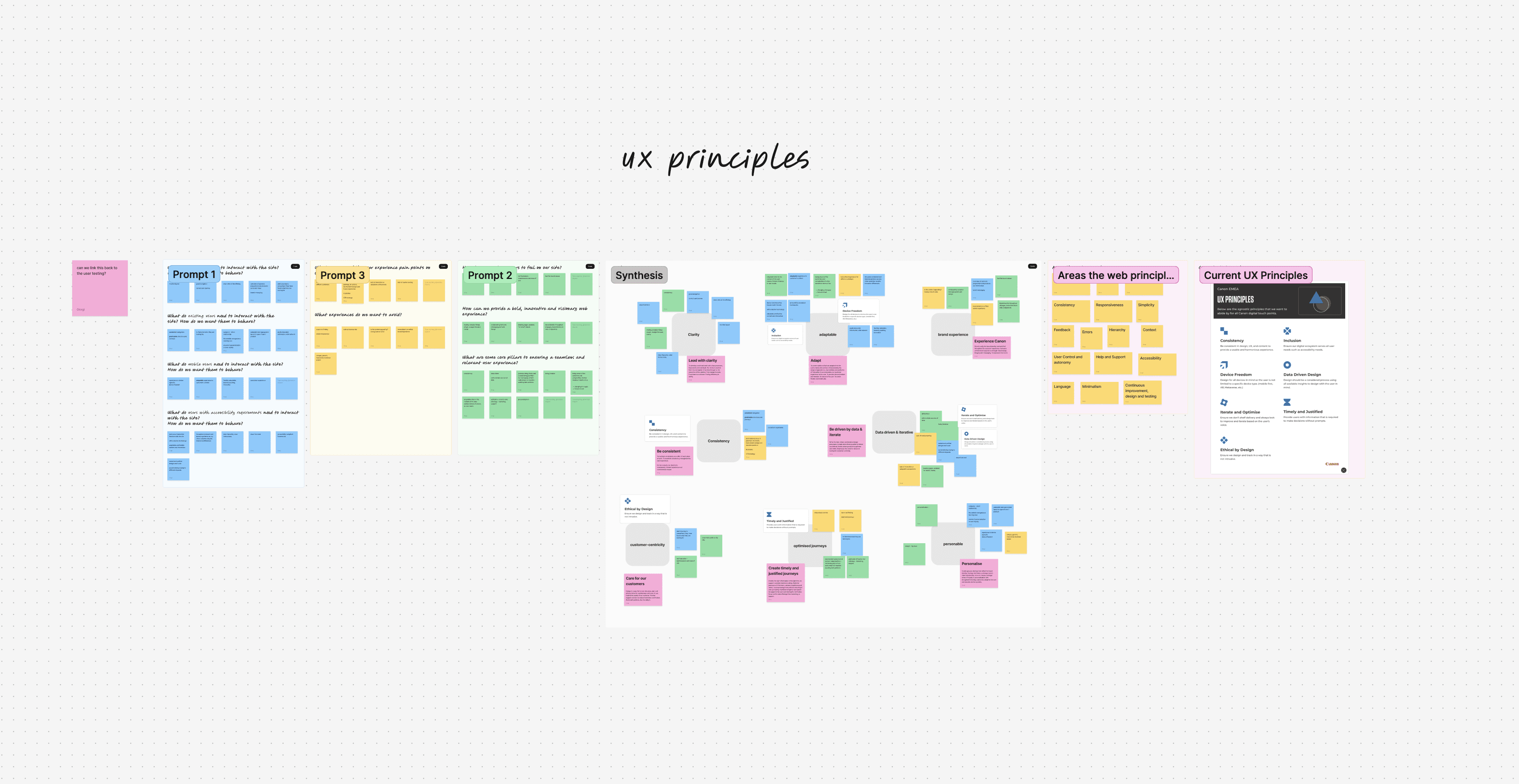
Overview - I noticed a gap in consistency in project briefing and lack of clarity around the business' understanding of User Experience design and decision-making. I took the lead on creating UX guidelines that would establish the frameworks within which we design, research and implement.
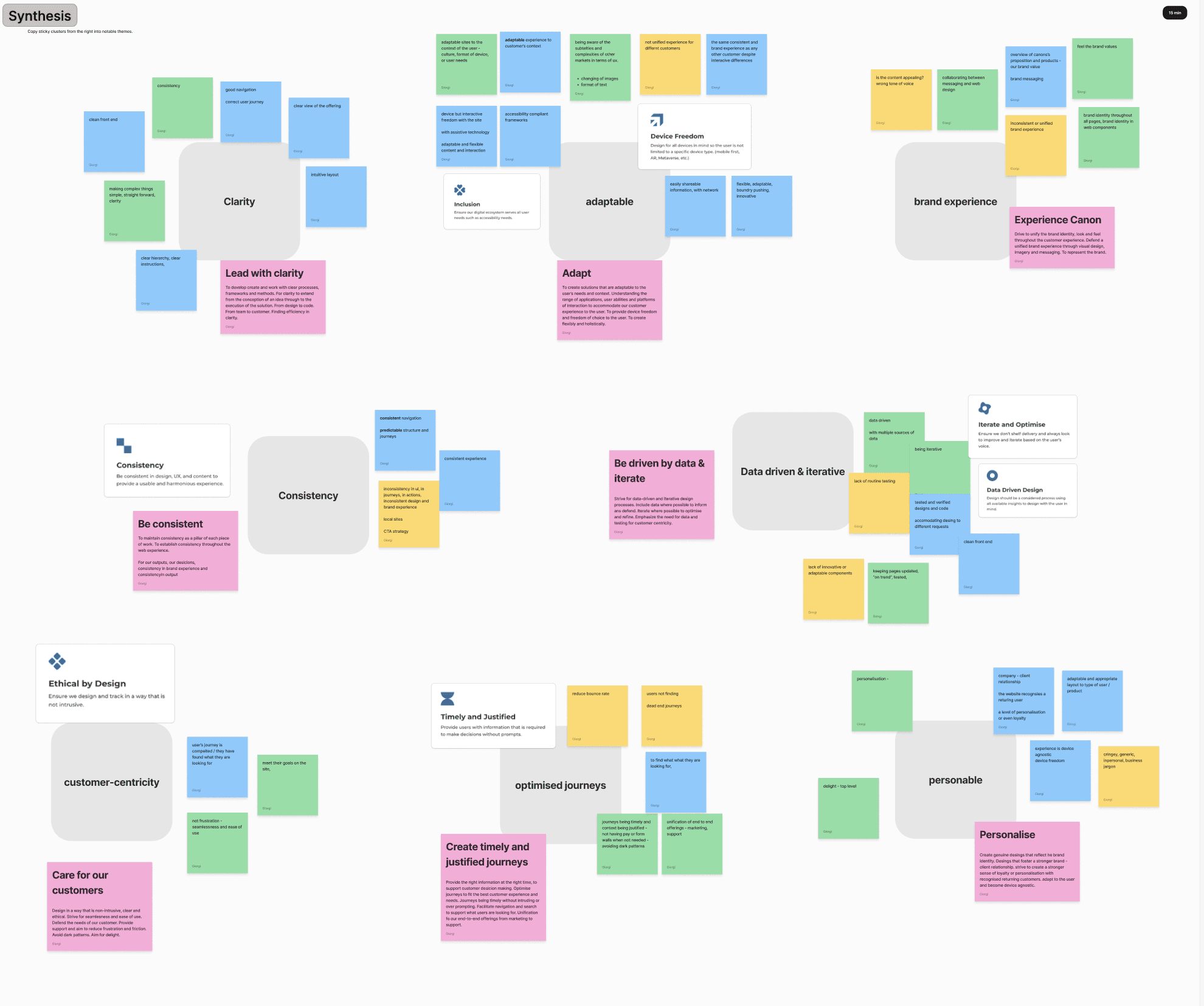
Methodology - I ran a workshop with our UX team to gather everyone's input on our UX goals, our range of user needs, the impact we have directly on them and ways of working we have with different teams. I assembled all the information into data-backed guidelines, with supporting internal documentation to present back to our key stakeholders.
Outcome - While the company is still in it's early stages of UX maturity, creating these guidelines helped position our team as a reference point for digital strategy. It was also a great opportunity to educate and onboard stakeholders into the value and structure of our processes.
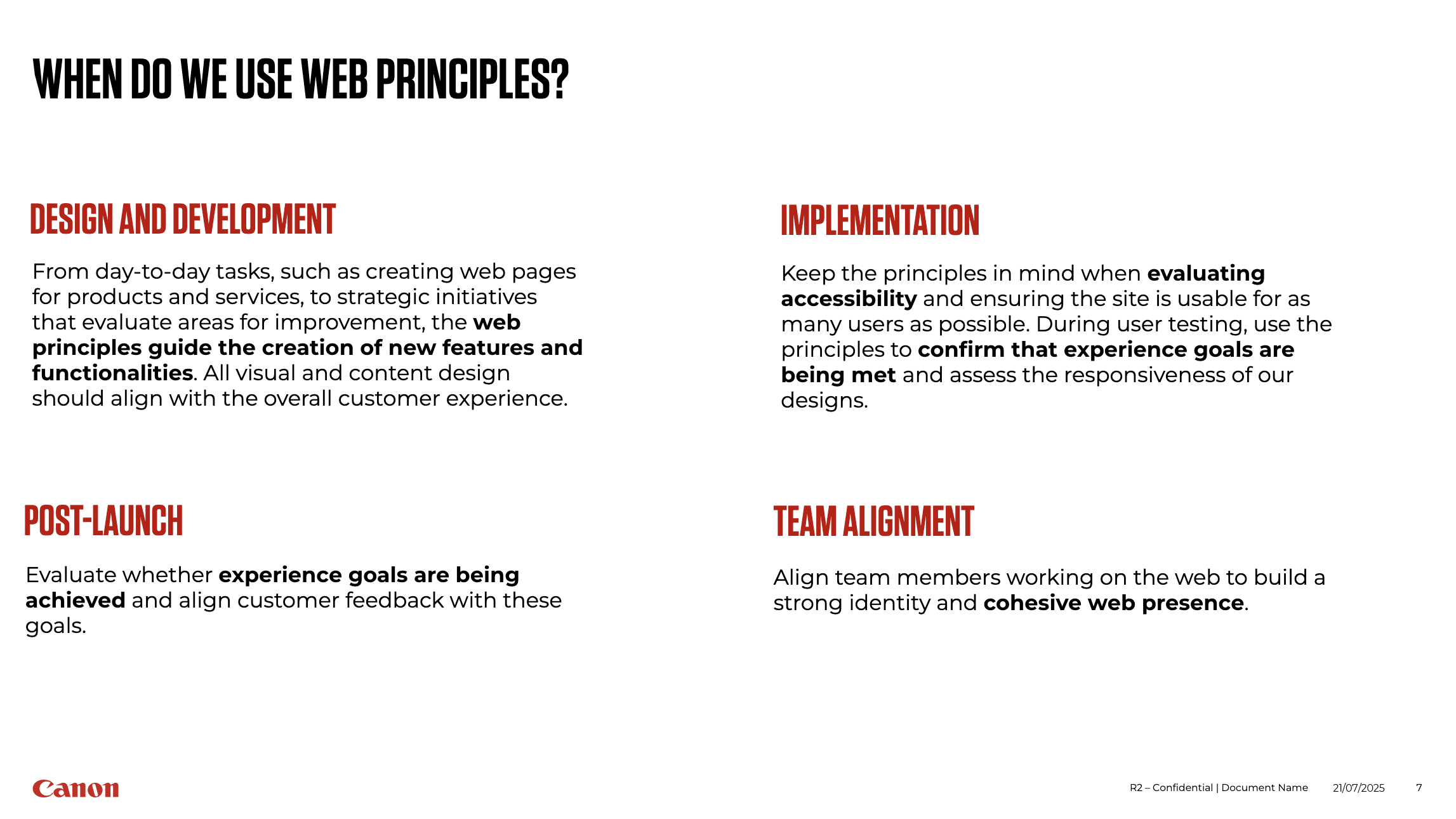
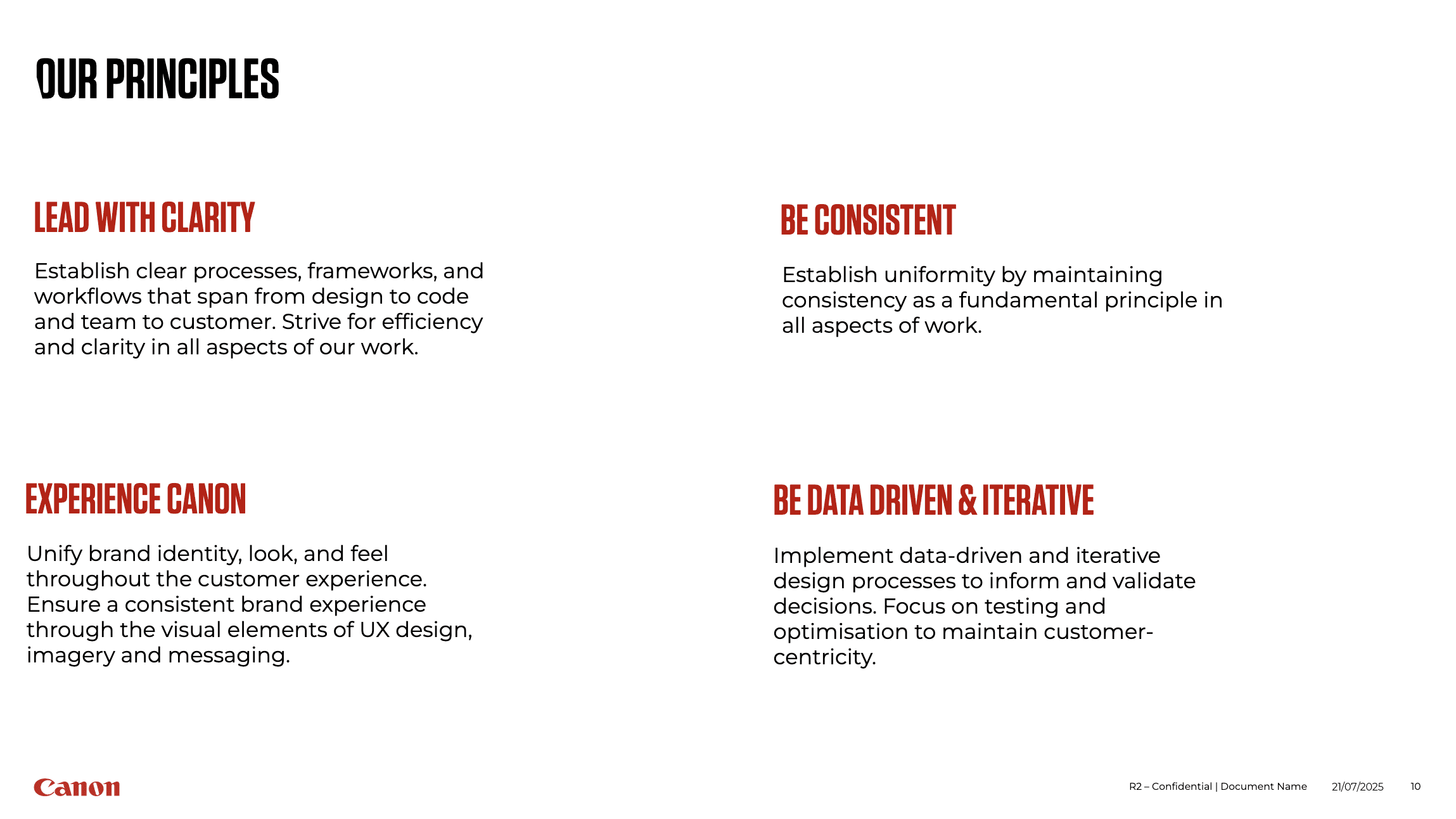
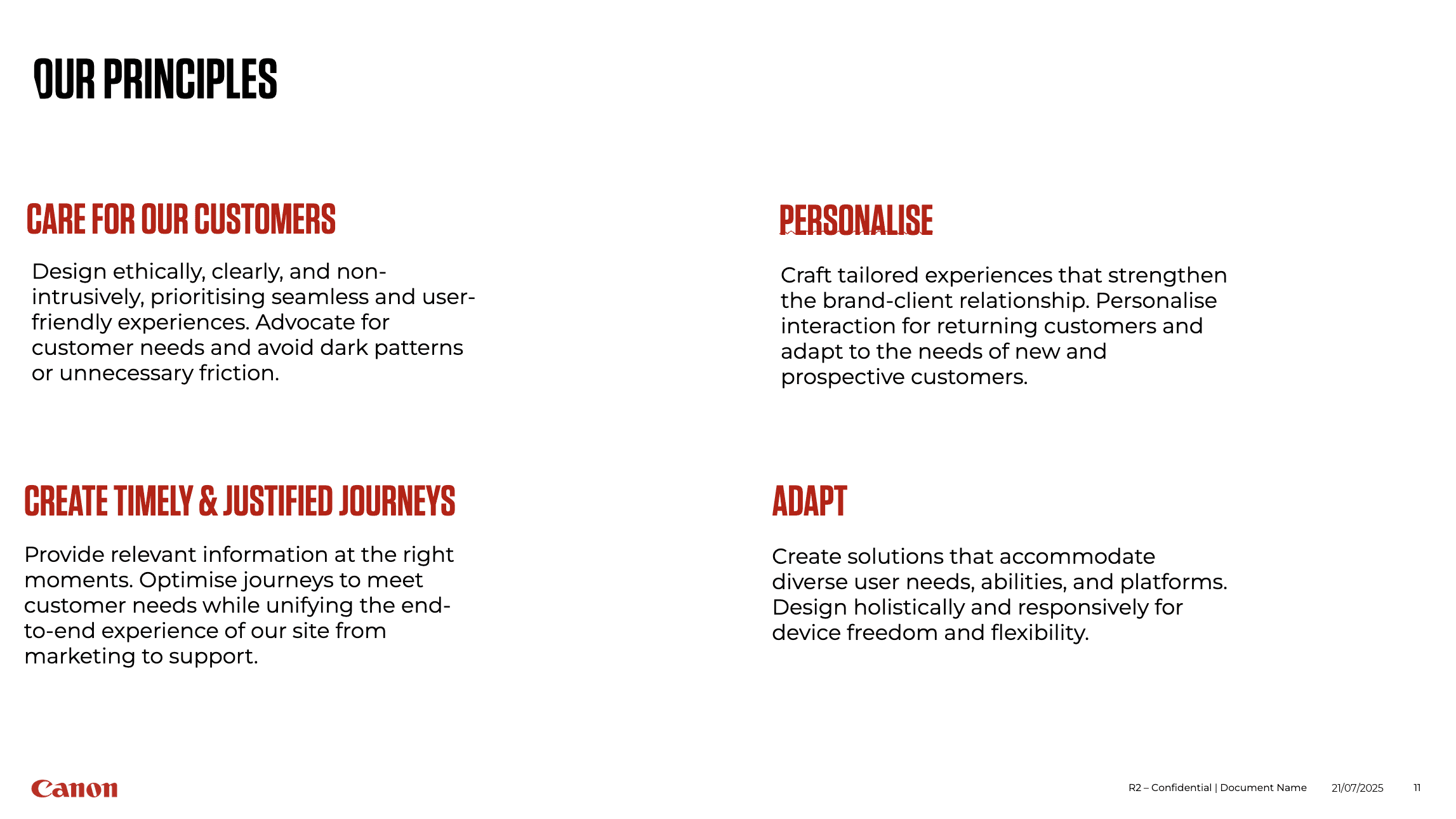
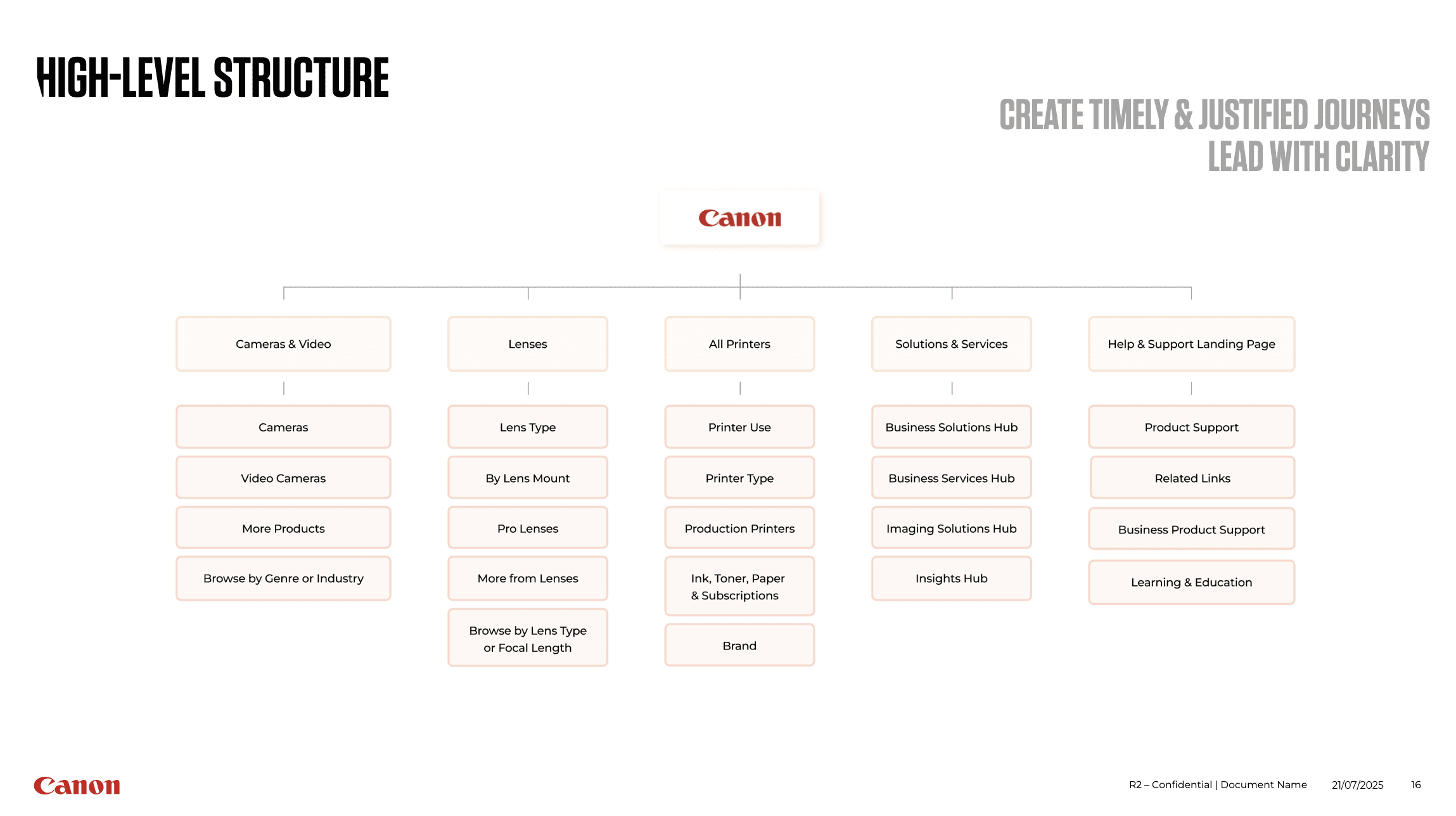
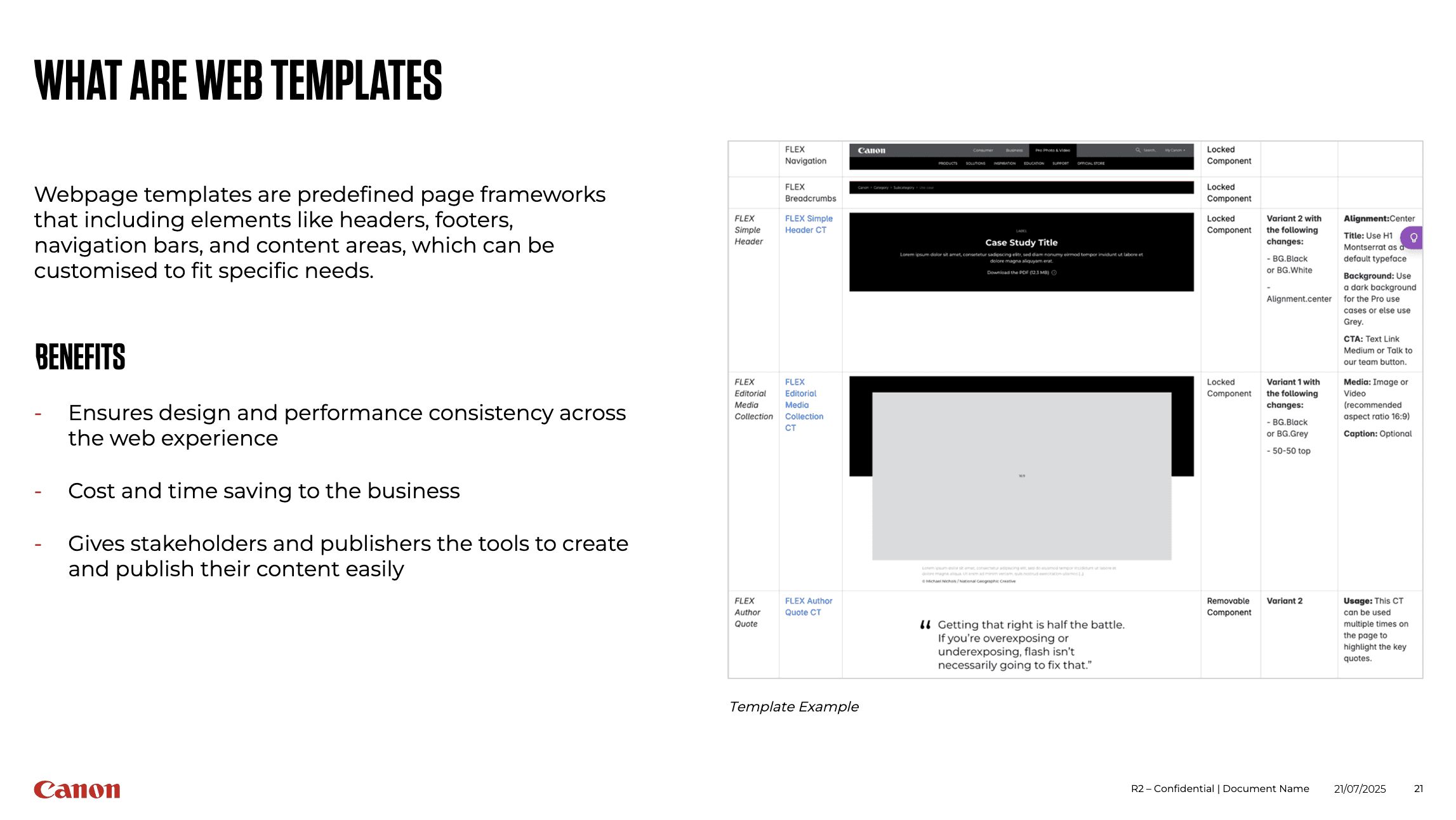
The UX guidelines outline our web UX principles, site structure, and templates to enhance user experience and streamline workflows. It emphasises consistency, scalability, and data-driven design. The result is a unified digital experience, efficient stakeholder communication and a user-friendly digital experience that is backed by customer data whilst also supporting business growth.
"Well done Giorgi for excellent delivery of the UX Principles and Guidelines, which were really well received by Katya and ensured we have the product owner’s support to cascade these to the wider stakeholders in H1!"
Product Manager